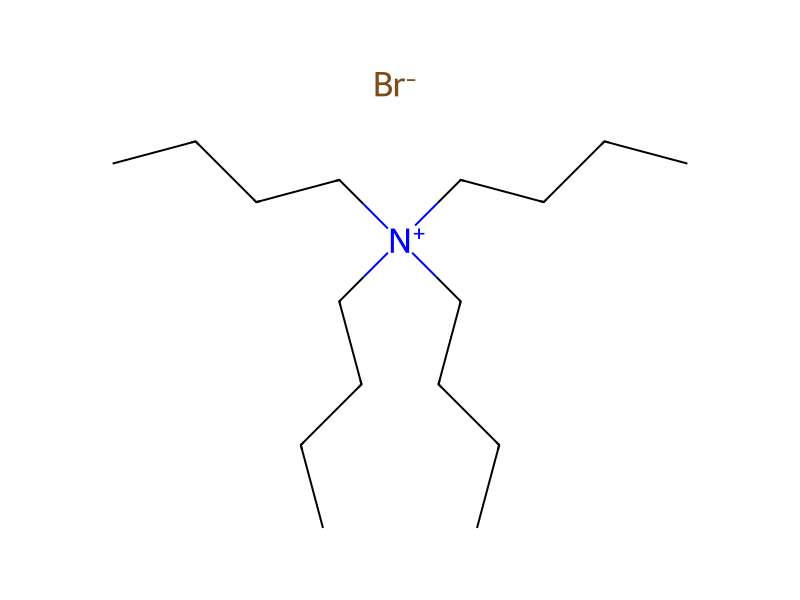
[F:1][C:2]([F:15])([F:14])[C:3]1[CH:12]=[C:11]2[C:6]([C:7]([SH:13])=[CH:8][CH:9]=[N:10]2)=[CH:5][CH:4]=1.[Br:16][CH2:17][C:18]1[CH:23]=[CH:22][CH:21]=[C:20]([CH2:24]Br)[CH:19]=1.C(Cl)(Cl)Cl.C([O-])([O-])=O.[K+].[K+]>CCCC[N+](CCCC)(CCCC)CCCC.[Br-].O>[Br:16][CH2:17][C:18]1[CH:19]=[C:20]([CH:21]=[CH:22][CH:23]=1)[CH2:24][S:13][C:7]1[C:6]2[C:11](=[CH:12][C:3]([C:2]([F:1])([F:14])[F:15])=[CH:4][CH:5]=2)[N:10]=[CH:9][CH:8]=17-Trifluoromethyl-4-quinoline-thiol (3.0 g, 13.1 mmol), 1,3-bis-bromomethyl-benzene (10.4 g, 39.3 mmol) and CHCl3 (150 mL) were charged in a 250 ml round-bottomed flask equipped with a magnetic stirrer. TBABr (0.5 g, 1.5 mmol) and water (12 mL) were added and the reaction mixture was stirred for 15 h at 20° C. The reaction mixture was poured in 10 mL of H2O with K2CO3 (1.8 g, 13.1 mmol), extracted with CH2Cl2 (400 mL). The organic layer was washed with water (30 mL), brine (2×30 mL), dried over MgSO4, filtered and evaporated at 30° C. to dryness. Diethyl ether (150 mL) was added and the bis-alkylated product was precipitated and filtered off. The filtrate was evaporated and the crude compound was purified by column chromatography (SiO2; CH2Cl2:MeOH=99.5:0.5 to 96:4) to give after evaporation 4-(3-(bromomethyl)benzylthio)-7-(trifluoromethyl)quinoline 28 (3.3 g, 61% yield) as a white solid.