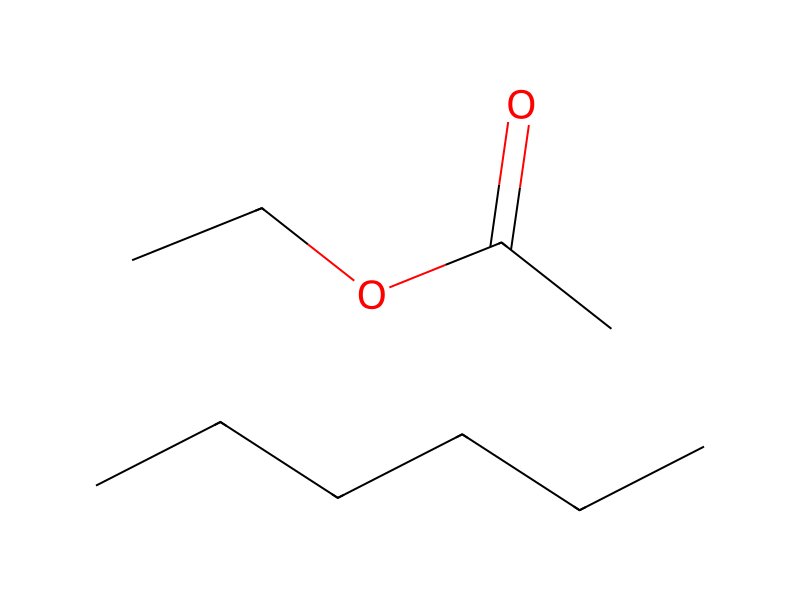
COC[O:4][C:5]1[CH:14]=[CH:13][C:12]2[O:11][CH:10]([C:15]3[CH:20]=[CH:19][C:18]([O:21]COC)=[CH:17][CH:16]=3)[CH:9]3[CH2:25][CH:26]([O:28][C:29](=[O:31])[CH3:30])[CH2:27][CH:8]3[C:7]=2[CH:6]=1.Cl.CCOC(C)=O.CCOC(C)=O.CCCCCC>C1COCC1>[OH:4][C:5]1[CH:14]=[CH:13][C:12]2[O:11][C@H:10]([C:15]3[CH:16]=[CH:17][C:18]([OH:21])=[CH:19][CH:20]=3)[C@@H:9]3[CH2:25][C@H:26]([O:28][C:29](=[O:31])[CH3:30])[CH2:27][C@@H:8]3[C:7]=2[CH:6]=1Dissolve acetate 42 (180 mg, 0.42 mmol) in THF (8 mL) and add 3M HCl (2 mL). Stir the reaction at room temperature overnight. Dilute the reaction with EtOAc and wash with saturated aqueous sodium bicarbonate and brine. Extract the aqueous solutions with EtOAc (1×). Combine, dry (Na2SO4), filter and concentrate the organic solutions in vacuo. Purify the product by flash chromatography (10 g SiO2, dry loading on 700 mg silica, 40 ml/min, 0-50% EtOAc/Hexane over 20 minutes and then 50% EtOAc/hexane for 13 minutes) to afford acetate 43 (47 mg, 0.14 mmol, 33%) as a white solid. The enantiomers were separated.