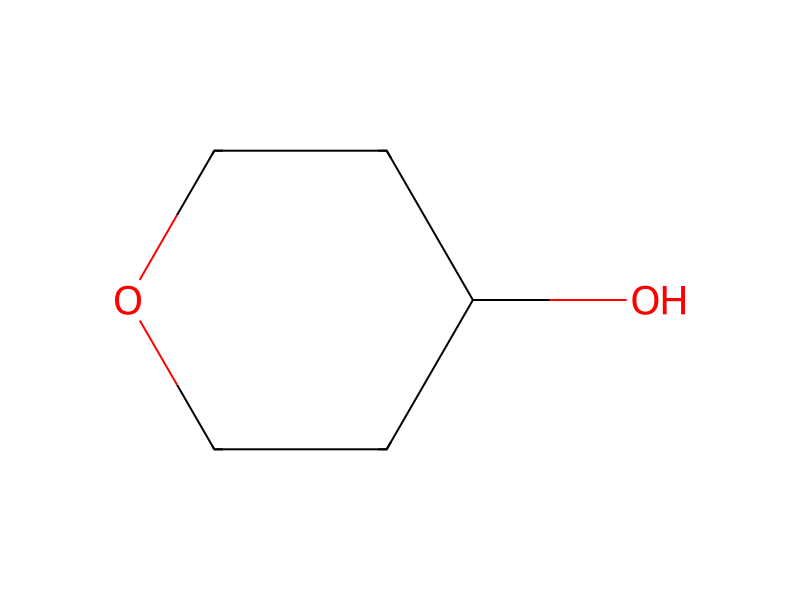
To a mixture of 5-bromo-3-pyridinol (5.22 g, 30 mmol), toluene (150 mL), triphenylphosphine (11.8 g, 45 mmol) and tetrahydropyran-4-ol (4.7 g, 45 mmol) was slowly added diethyl azodicarboxylate (7.1 mL, 45 mmol). The mixture was heated at reflux for 20 h, then cooled to room temperature, washed with water (3×100 mL) and then brine (100 mL), then dried (MgSO4), filtered and concentrated by rotary evaporation. The crude oil was treated with diisopropyloxide (50 mL) and the solid thus obtained was filtered and washed with diisopropyloxide (20 mL). The combined filtrates were concentrated by rotary evaporation and purified by column chromatography on silica gel, eluting with ethyl acetate/cyclohexane (20/80, v/v). Selected fractions containing the product were concentrated via rotary evaporation to give 5 g (65%) of a yellow oil.