Sodium Azide → 7-Azido-6-nitro-4-(3,4,5-trimethoxyanilino)-3-quinolinecarbonitrile
HRID 2213734
反応式

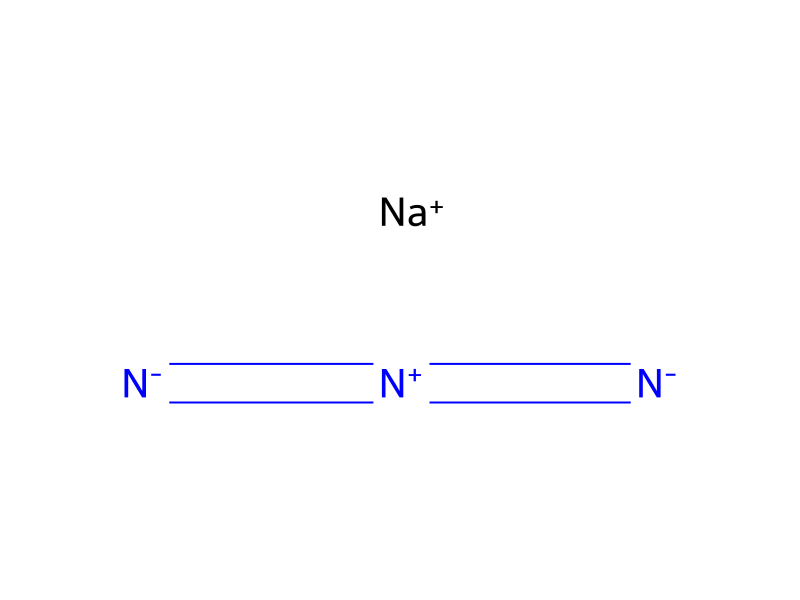
Cl[C:2]1[CH:11]=[C:10]2[C:5]([C:6]([NH:14][C:15]3[CH:20]=[C:19]([O:21][CH3:22])[C:18]([O:23][CH3:24])=[C:17]([O:25][CH3:26])[CH:16]=3)=[C:7]([C:12]#[N:13])[CH:8]=[N:9]2)=[CH:4][C:3]=1[N+:27]([O-:29])=[O:28].[N-:30]=[N+:31]=[N-:32].[Na+]>CS(C)=O>[N:30]([C:2]1[CH:11]=[C:10]2[C:5]([C:6]([NH:14][C:15]3[CH:20]=[C:19]([O:21][CH3:22])[C:18]([O:23][CH3:24])=[C:17]([O:25][CH3:26])[CH:16]=3)=[C:7]([C:12]#[N:13])[CH:8]=[N:9]2)=[CH:4][C:3]=1[N+:27]([O-:29])=[O:28])=[N+:31]=[N-:32]参加物
4



実験手順
A mixture of 506.1 mg (1.2 mmol) of 7-chloro-6-nitro-4-(3,4,5-trimethoxyanilino)-3-quinolinecarbonitrile and 390.0 mg (6.0 mmol) of sodium azide in 10.0 mL of DMSO is heated at 40–50° C. for 5 hours, and then at room temperature for 15 hours. The mixture is poured into ice water and extracted with ethyl acetate. The organic phase is washed with brine and dried over sodium sulfate. Removal of the solvent yields 493.4 mg (97.7%) of 7-azido-6-nitro-4-(3,4,5-trimethoxyanilino)-3-quinolinecarbonitrile as a yellow solid which is used in the next reaction without further purification.