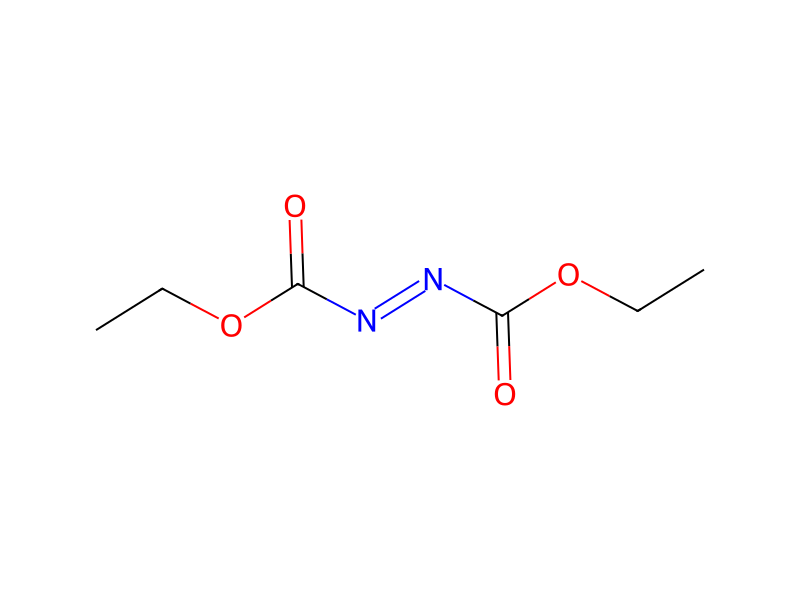
N(C(OCC)=O)=NC(OCC)=O.[OH:13][C:14]1[CH:15]=[C:16]([CH2:20][C:21]#[N:22])[CH:17]=[CH:18][CH:19]=1.C1(P(C2C=CC=CC=2)C2C=CC=CC=2)C=CC=CC=1.[C:42]([N:49]1[CH2:55][CH2:54][CH2:53][C@@H:50]1[CH2:51]O)([O:44][C:45]([CH3:48])([CH3:47])[CH3:46])=[O:43]>O1CCCC1>[C:21]([CH2:20][C:16]1[CH:15]=[C:14]([CH:19]=[CH:18][CH:17]=1)[O:13][CH2:51][C@H:50]1[CH2:53][CH2:54][CH2:55][N:49]1[C:42]([O:44][C:45]([CH3:46])([CH3:48])[CH3:47])=[O:43])#[N:22]Diethyl azodicarboxylate (3.92 g, 22.5 mmol) was added dropwise to a solution of 3-hydroxyphenyl acetonitrile (3.0 g, 22.5 mmol), triphenylphosphine (5.90 g, 22.5 mmol) and Boc-(R)-prolinol (4.53 g, 22.5 mmol) in tetrahydrofuran (30 ml), and the reaction stirred at room temperature for 18 hrs. The mixture was evaporated under reduced pressure and the residue partitioned between dichloromethane and water. The layers were separated, the organic phase washed with water, dried over MgSO4 and concentrated under reduced pressure. The crude product was purified by column chromatography on silica gel using an elution gradient of dichloromethane:pentane:methanol (80:20 to 100:0:0 to 95:0:5) to give the title compound, (2.69 g, 38%).