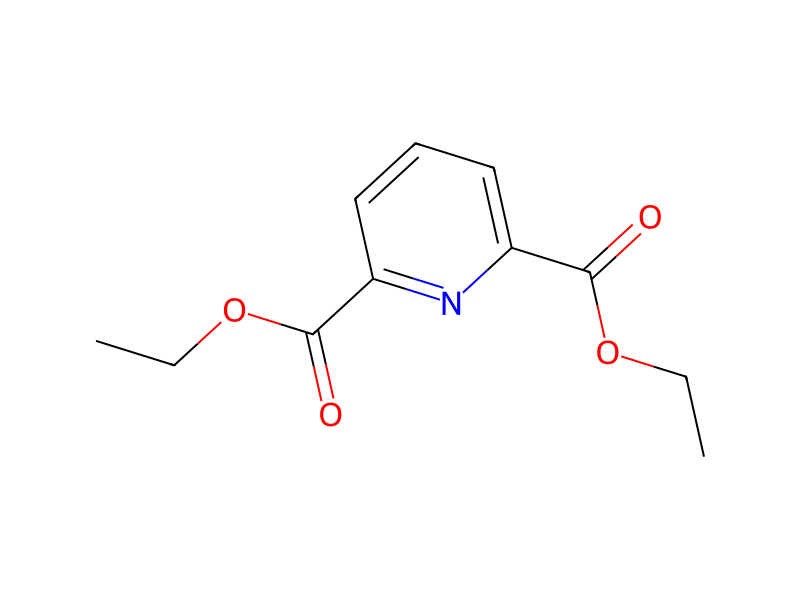
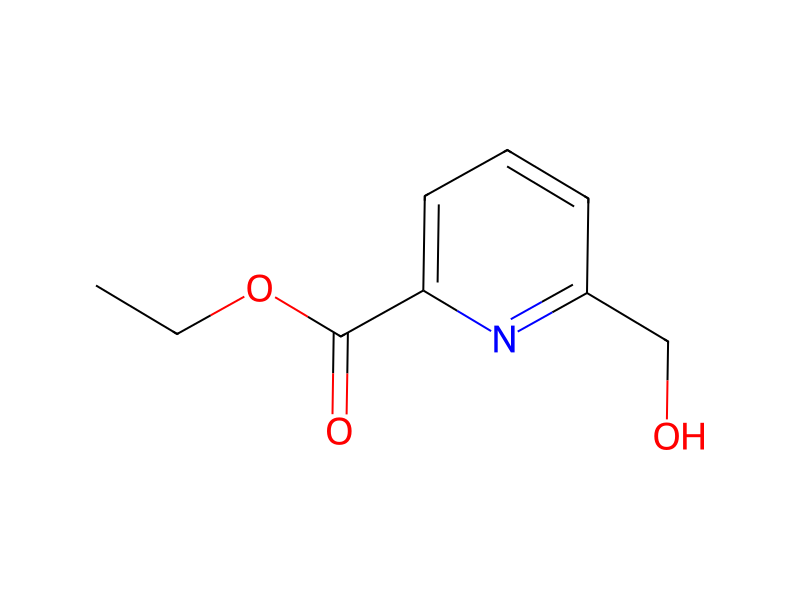
Diethyl dipicolinate → 2-Pyridinecarboxylic acid, 6-(hydroxymethyl)-, ethyl ester
HRID 2356607
反応式
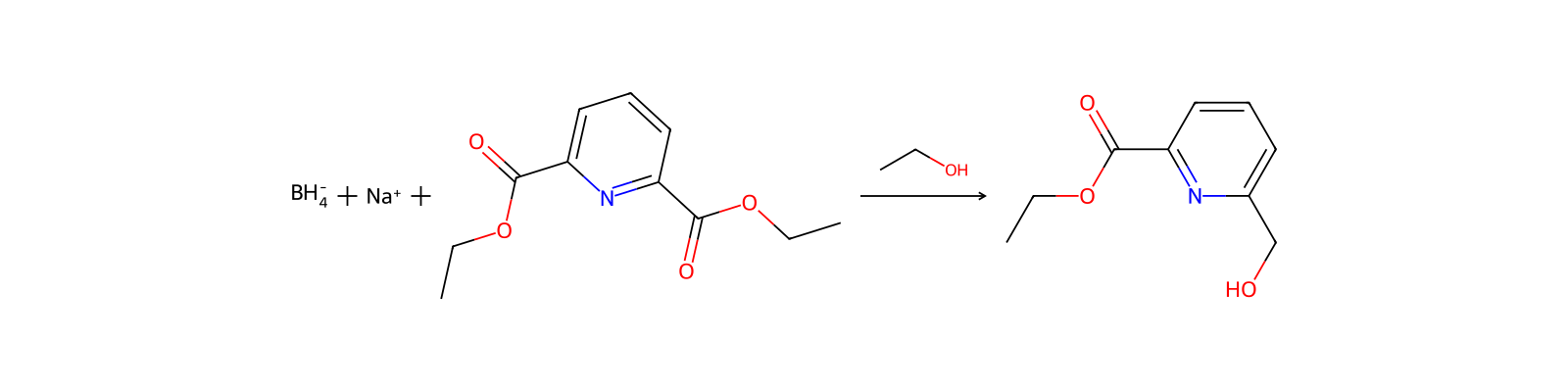
[BH4-].[Na+].[N:3]1[C:8]([C:9](OCC)=[O:10])=[CH:7][CH:6]=[CH:5][C:4]=1[C:14]([O:16][CH2:17][CH3:18])=[O:15]>C(O)C>[OH:10][CH2:9][C:8]1[N:3]=[C:4]([C:14]([O:16][CH2:17][CH3:18])=[O:15])[CH:5]=[CH:6][CH:7]=1参加物
4


実験手順
11.4 g (0.3 mol) of sodium borohydride was added in one portion to a stirred solution of 111.5 g (0.5 mol) of diethyl 2,6-pyridinedicarboxylate in 1 litre of ethanol and stirred for 6 hours when a further 2.85 g (0.075 mol) of sodium borohydride were added and the mixture stirred overnight before being evaporated. The residue was dissolved in 800 ml dichloromethane and washed with water. The aqueous was extracted with 4×50 ml of dichloromethane. The combined organics were dried, evaporated and combined with the product from reaction 1 (13.1 g). The combined material was washed through a pad of silica on a large sinter with ethyl acetate (2 litres) which was evaporated and triturated with ether and filtered off to give 72.6 g of a white solid. The MLS (mother liquors) were evaporated and biotaged (chromatographed) [ethyl acetate/hexane (3:1)] to give a further 2.9 g of product.