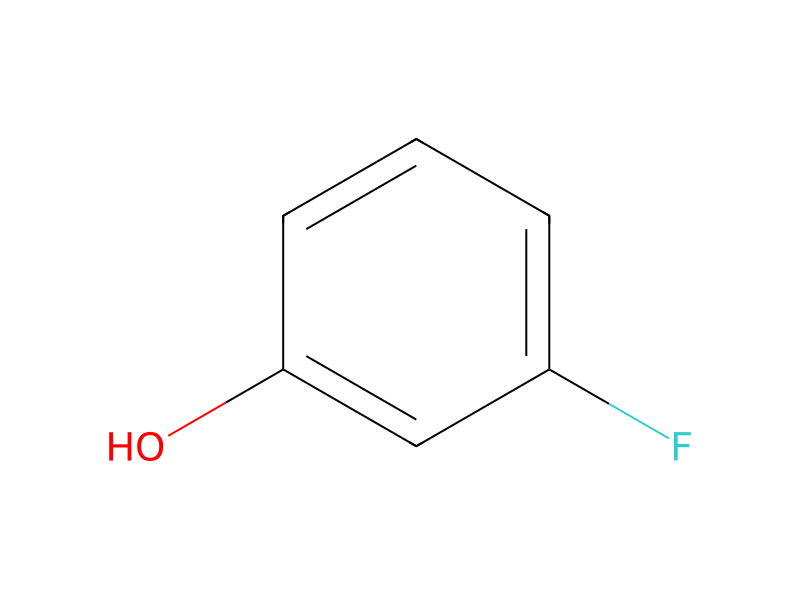
[NH2:1][C:2]1[CH:11]=[CH:10][C:9]2[C:4](=[N:5][C:6](Cl)=[CH:7][CH:8]=2)[N:3]=1.[F:13][C:14]1[CH:15]=[C:16]([OH:20])[CH:17]=[CH:18][CH:19]=1.[OH-].[K+]>C(#N)C>[NH2:1][C:2]1[CH:11]=[CH:10][C:9]2[C:4](=[N:5][C:6]([O:20][C:16]3[CH:17]=[CH:18][CH:19]=[C:14]([F:13])[CH:15]=3)=[CH:7][CH:8]=2)[N:3]=1The procedure is similar to that described in Example 37, but starting with 2-amino-7-chloro-1,8-naphthyridine (18 g), 3-fluorophenol (44.8 g) and potassium hydroxide pellets (13.2 g; 85% purity). After treatment with caustic soda and washing, the product produced (23.5 g; m.p. 161° C.) is dissolved in boiling acetonitrile (120 cc). After 2 hours' cooling at 4° C., the crystallised solid is separated by filtration, washed with acetonitrile (2×10 cc) and dried at 40° C. under reduced pressure (0.067 kPa). 2-Amino-7-(3-fluorophenoxy)-1,8-naphthyridine (16.5 g) is produced, m.p. 165° C.