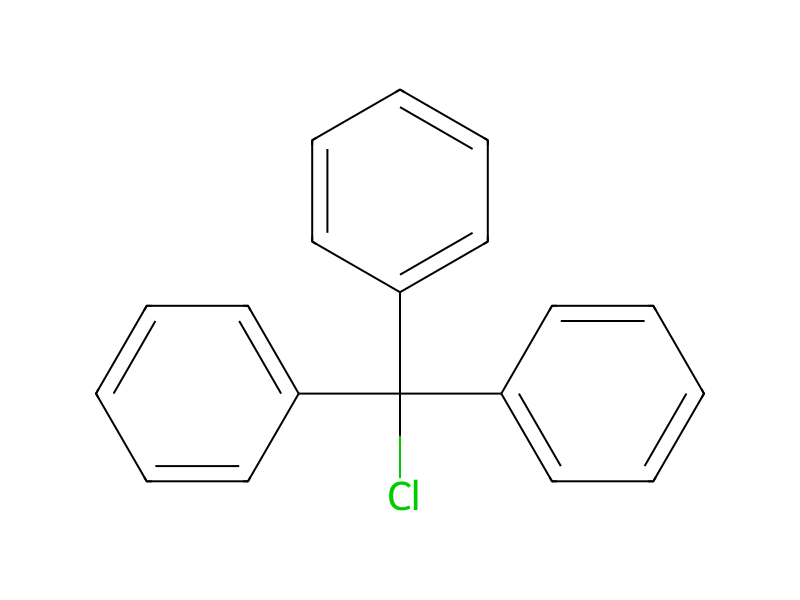
Trityl chloride → HCID 44195635、化合物
反応式

[C:1](/[N:4]=[CH:5]/[N:6]([CH3:8])[CH3:7])(=[S:3])[NH2:2].[C:9](Cl)([C:22]1[CH:27]=[CH:26][CH:25]=[CH:24][CH:23]=1)([C:16]1[CH:21]=[CH:20][CH:19]=[CH:18][CH:17]=1)[C:10]1[CH:15]=[CH:14][CH:13]=[CH:12][CH:11]=1>ClCCl>[CH3:7][N:6]([CH3:8])/[CH:5]=[N:4]/[C:1](=[S:3])[NH:2][C:9]([C:10]1[CH:15]=[CH:14][CH:13]=[CH:12][CH:11]=1)([C:22]1[CH:23]=[CH:24][CH:25]=[CH:26][CH:27]=1)[C:16]1[CH:17]=[CH:18][CH:19]=[CH:20][CH:21]=1参加物
4



実験手順
(E)-N′-carbamothioyl-N,N-dimethylformimidamide (63) (5 g, 38 mmol), tritylchloride (11.6 g, 41.8 mmol) and trietheylamine (16 mL, 114 mmol) were refluxed in dichloromethane overnight. The reaction mixture was cooled to room temperature and filtered through a plug of celite. The resulting filtrate was washed with saturated sodium bicarbonate solution, followed with brine. The organic layer was dried with sodium sulfate, filtered and concentrated in vacuo. The residue was purified by flash chromatography on silica gel column (40%-100% EtOAc in hexanes) to afford (E)-N,N-dimethyl-N′-(tritylcarbamothioyl) formimidamide (64) as a white solid.