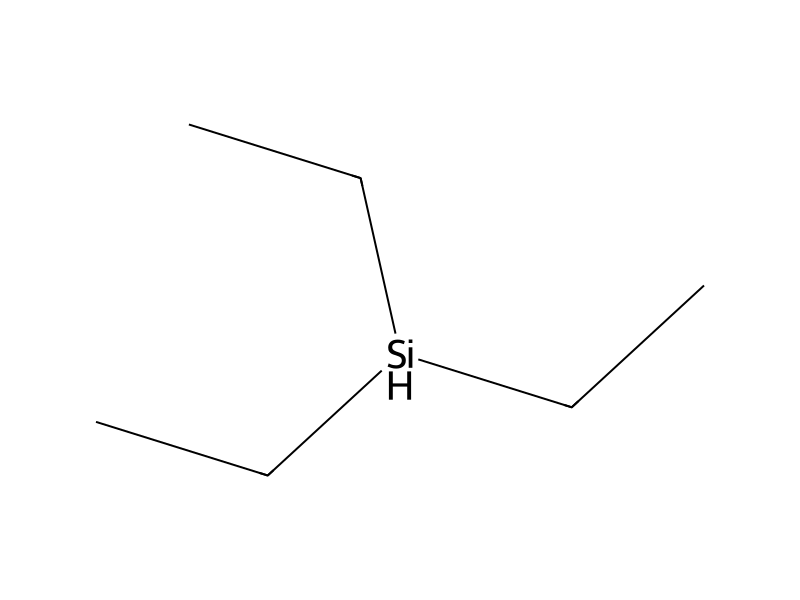
[Br:1][C:2]1[CH:7]=[CH:6][C:5]([C:8]2[CH:13]=[CH:12][CH:11]=[CH:10][CH:9]=2)=[CH:4][CH:3]=1.[Cl-].[Al+3].[Cl-].[Cl-].[CH3:18][CH:19]([CH2:24][CH2:25][CH2:26][CH:27]([CH3:29])[CH3:28])[CH2:20][C:21](Cl)=O.C([SiH](CC)CC)C>C(Cl)Cl>[Br:1][C:2]1[CH:3]=[CH:4][C:5]([C:8]2[CH:13]=[CH:12][C:11]([CH2:21][CH2:20][CH:19]([CH3:18])[CH2:24][CH2:25][CH2:26][CH:27]([CH3:29])[CH3:28])=[CH:10][CH:9]=2)=[CH:6][CH:7]=1A solution of 4-bromo-biphenyl (7.00 g, 0.030 mol), aluminium chloride (4.40 g, 0.033 mol) and 3,7-dimethyloctanoyl chloride (step 2) (6.90 g, 0.036 mol), in dry DCM was prepared at room temperature. The stirring reaction mixture was left to react at room temperature until g.l.c. and t.l.c. analyses revealed a complete reaction, the reaction mixture was then treated with triethylsilane (9.30 g, 0.080 mol) and left stirring overnight. The reaction product was extracted into DCM (2×100 ml) and the combined organic layers were washed with brine, water and dried (MgSO4). The product was adsorbed onto silica gel and purified by column chromatography [DCM] and recrystallised from ethanol to yield a white powder.