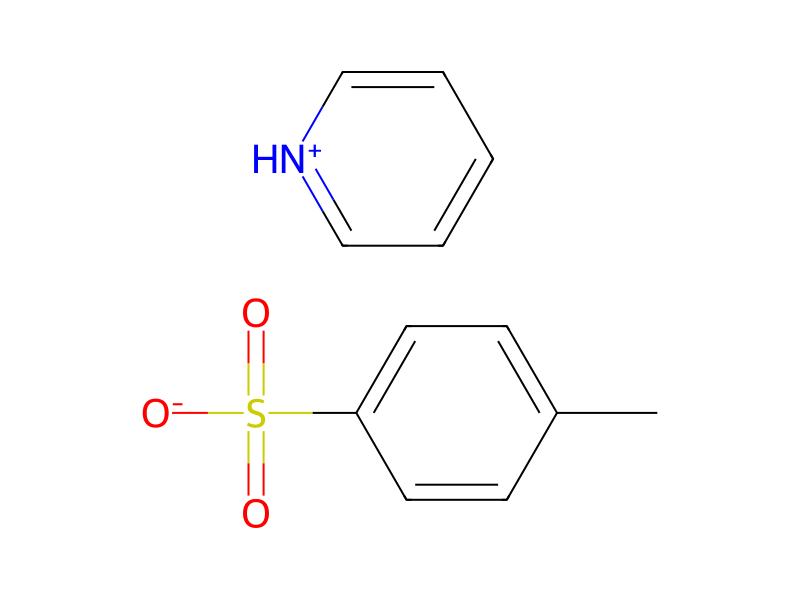
[I:1][C:2]1[CH:7]=[N:6][NH:5][C:4](=[O:8])[CH:3]=1.C1(C)C=CC(S([O-])(=O)=O)=CC=1.[NH+]1C=CC=CC=1.[O:26]1[CH:31]=[CH:30][CH2:29][CH2:28][CH2:27]1>O1CCCC1>[I:1][C:2]1[CH:7]=[N:6][N:5]([CH:27]2[CH2:28][CH2:29][CH2:30][CH2:31][O:26]2)[C:4](=[O:8])[CH:3]=1A solution of 5-iodo-2H-pyridazin-3-one (66 g, 0.30 mol) in tetrahydrofuran (500 mL) was treated with pyridinium para-toluene sulfonate (14.3 g, 0.057 mol) and 3,4-dihydro-2H-pyran (52 mL). The reaction mixture was stirred at reflux for 5 h. At this time, the reaction was treated with another aliquot of 3,4-dihydro-2H-pyran (32.5 mL). The solution was stirred at reflux overnight. At this time, the solution was concentrated in vacuo. Chromatography (ethyl acetate/petroleum ether=1/2) afforded 5-iodo-2-(tetrahydro-pyran-2-yl)-2H-pyridazin-3-one (89 g, 98%).