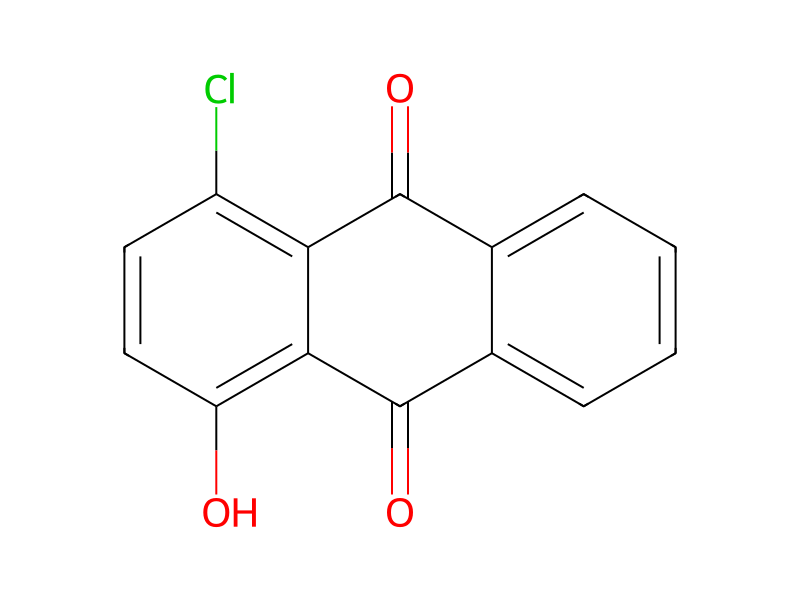
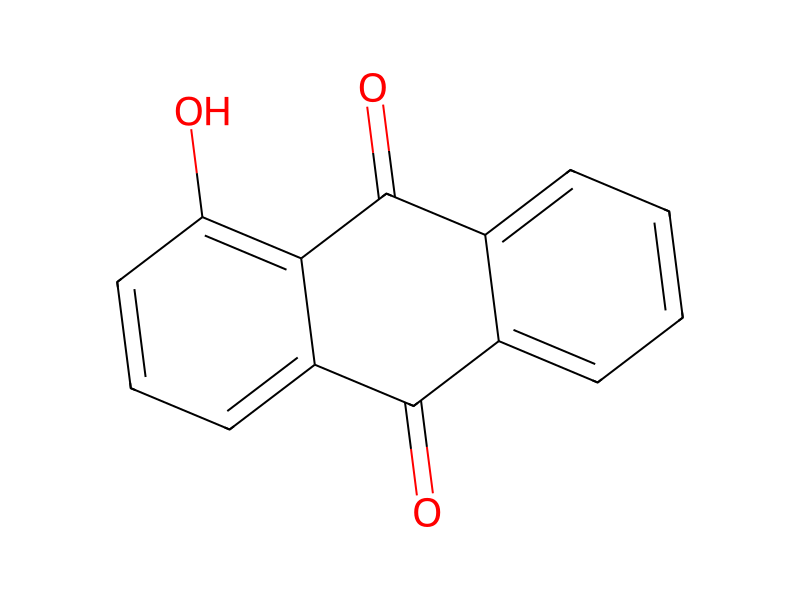
1-Chloro-4-hydroxyanthraquinone → 1-Hydroxyanthraquinone
HRID 256277
反応式

Cl[C:2]1[C:15]2[C:14](=[O:16])[C:13]3[C:8](=[CH:9][CH:10]=[CH:11][CH:12]=3)[C:7](=[O:17])[C:6]=2[C:5]([OH:18])=[CH:4][CH:3]=1.C1(C2C=CC(N)=CC=2)CCCCC1.C([O-])(=O)C.[Na+]>[N+](C1C=CC=CC=1)([O-])=O.C([O-])(=O)C.[Cu+2].C([O-])(=O)C>[OH:18][C:5]1[C:6]2[C:7](=[O:17])[C:8]3[C:13](=[CH:12][CH:11]=[CH:10][CH:9]=3)[C:14](=[O:16])[C:15]=2[CH:2]=[CH:3][CH:4]=1