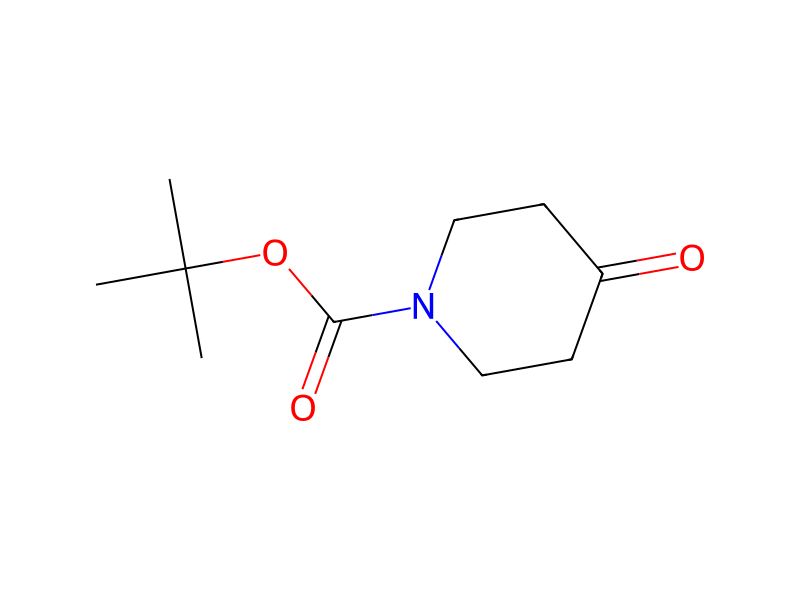
Cl.[C:2]1([N:8]([C:10]2[CH:15]=[CH:14][CH:13]=[CH:12][CH:11]=2)N)[CH:7]=[CH:6][CH:5]=[CH:4][CH:3]=1.[C:16]([O:20][C:21]([N:23]1[CH2:28][CH2:27][C:26](=O)[CH2:25][CH2:24]1)=[O:22])([CH3:19])([CH3:18])[CH3:17]>N1C=CC=CC=1>[C:16]([O:20][C:21]([N:23]1[CH2:28][CH2:27][C:26]2[N:8]([C:10]3[CH:15]=[CH:14][CH:13]=[CH:12][CH:11]=3)[C:2]3[CH:7]=[CH:6][CH:5]=[CH:4][C:3]=3[C:25]=2[CH2:24]1)=[O:22])([CH3:19])([CH3:17])[CH3:18]A mixture of 1,1-diphenylhydrazine hydrochloride (0.365 g, 1.65 mmol) and 4-oxo-1-piperidinecarboxylic acid tert-butyl ester (0.329 g, 1.65 mmol) in pyridine (3 mL) was heated in a sealed tube at 120° C. with stirring for 3 h. The reaction mixture was subsequently cooled to room temperature and partitioned between ethyl acetate and water. The organic layer was separated, dried (MgSO4), filtered and evaporated to dryness. The residue was chromatographed (SiO2/hexanes:ethyl acetate, 3:2) to give the title compound (0.214 g, 37%) as a brown oil. 1H NMR (400 MHz, CDCl3) δ 7.51 (m, 2H), 7.40 (m, 1H), 7.35 (m, 2H), 7.26 (m, 2H), 7.14 (m, 2H), 4.72 (s, 2H), 3.78 (s, 2H), 2.71 (s, 2H), 1.51 (s, 9H); LCMS: m/e 349 (M+H)+.