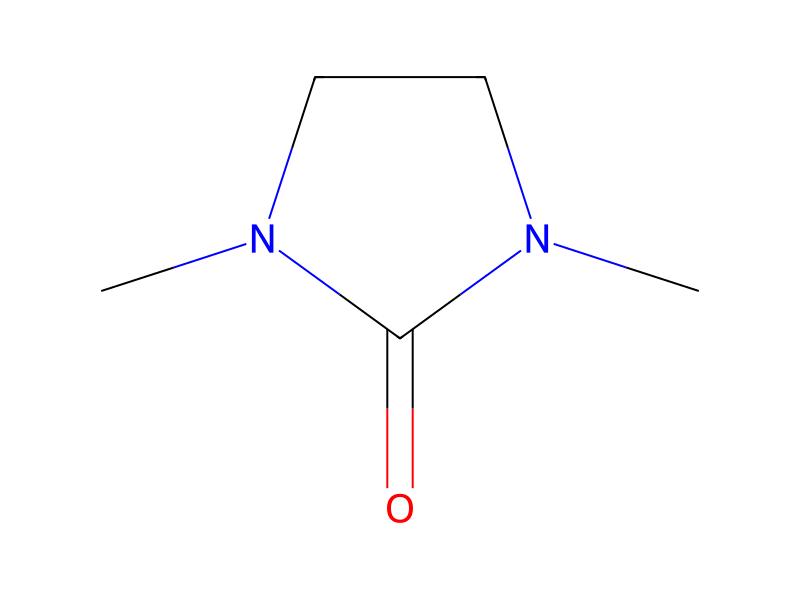
To a mixture of 38.9 ml (278 mmoles) of diisopropylamine and 320 ml of tetrahydrofuran, cooled to -60° C., there is successively poured dropwise 174 ml of a solution of 1.6M of n-butyllithium in hexane to which 50 ml of tetrahydrofuran have been added, a mixture of 24 g (252 mmoles) of cyclopentanecarbonitrile and of 50 ml of tetrahydrofuran, 65 ml of 1,3-dimethylimidazolidinone and finally 73.95 g (257 mmoles) of the compound prepared in example 26a. The temperature is allowed to rise to 20° C. After 16 hours at 20° C. the mixture is refluxed during 13 hours. After cooling 1000 ml water are added and the mixture is stirred one hour at room temperature before adding 35 ml concentrated HCl and stirring again one hour. The mixture is extracted with ethyl acetate and is thereafter washed with water, dried over Na2SO4, before being concentrated under reduced pressure. The purification is carried out by distillation which gives 41.1 g (yield=71.1%) of yellow oil. b.P.0.3 =175°-85° C.