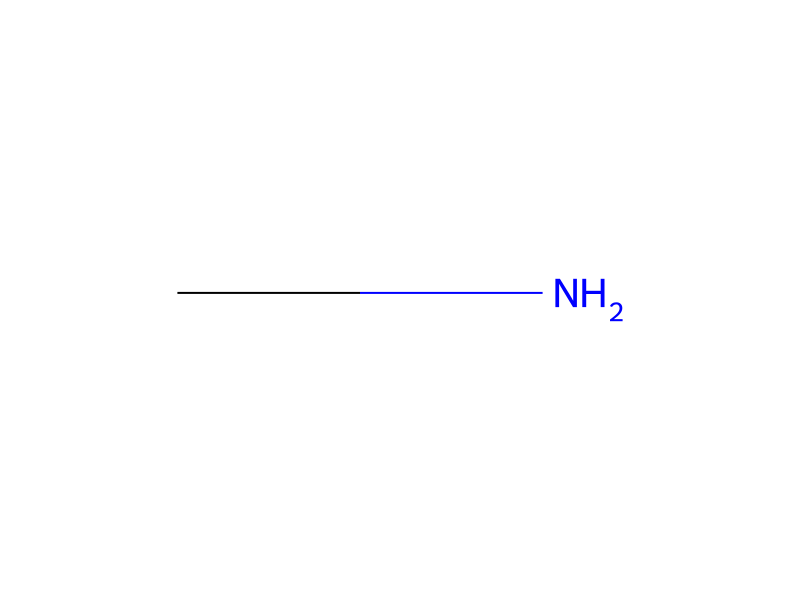
[Br:1][C:2]1[N:3]=[C:4]([C:9]2[O:10][C:11]([C:14]3[CH:19]=[CH:18][C:17]([CH2:20]Br)=[CH:16][CH:15]=3)=[N:12][N:13]=2)[C:5]([NH2:8])=[N:6][CH:7]=1.C(=O)([O-])[O-].[Na+].[Na+].[CH3:28][NH2:29]>O>[Br:1][C:2]1[N:3]=[C:4]([C:9]2[O:10][C:11]([C:14]3[CH:19]=[CH:18][C:17]([CH2:20][NH:29][CH3:28])=[CH:16][CH:15]=3)=[N:12][N:13]=2)[C:5]([NH2:8])=[N:6][CH:7]=15-bromo-3-[5-[4-(bromomethyl)phenyl]-1,3,4-oxadiazol-2-yl]pyrazin-2-amine (100 mg, 0.2433 mmol) and sodium carbonate (77.36 mg, 0.7299 mmol) were suspended in and treated with methanamine (182.5 μL of 2 M, 0.3650 mmol). The reaction was heated at 60° C. for 10 minutes. The remaining excess of methanamine (425.8 μL of 2 M, 0.8515 mmol) was then added and the reaction heated at 60° C. for a further 10 minutes. The reaction was cooled, diluted with water and extracted into dichloromethane. The organic layer was dried over Na2SO4, filtered and concentrated in vacuo to yield 5-bromo-3-[5-[4-(methylaminomethyl)phenyl]-1,3,4-oxadiazol-2-yl]pyrazin-2-amine (75 mg, 0.2076 mmol, 85.34%) as a yellow solid. LC/MS m/z 362.3 [M+H]+.