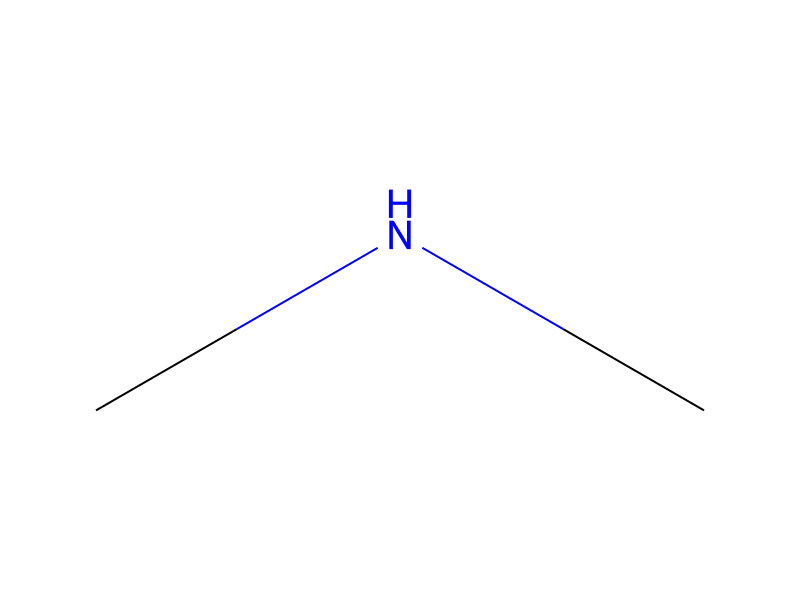
2-Fluoro-4-(6-oxo-3,4,5,6-tetrahydro-1H-azepino[5,4,3-cd]indol-2-yl)-benzaldehyde (72 mg, 0.23 mmol. Prepared via the standard two-step, one-pot suzuki coupling of the tricyclic bromide and 4-bromo-2-fluoro-benzaldehyde as described for Example YY) was dissolved in 2 mL 2.0 M dimethylamine in methanol. The orange solution was stirred at room temperature 10 min. The reaction was then cooled to 0° C. and a solution containing zinc chloride (17 mg, 0.13 mmol) and sodium cyanoborohydride (16 mg, 0.26 mmol) in 1 mL methanol, was added dropwise. The pH was adjusted to ca. 3 with concentrated HCl. The reaction was stirred for one hour as the temperature gradually warmed to room temperature. The reaction was partitioned between CHCl3 and water. The pH of the aqueous layer was adjusted to ca. 13 with solid KOH. The layers were separated, and the aqueous layer extracted with 25% iPrOH/CHCl3. The combined organic layers were dried (MgSO4) then concentrated in vacuo. Radial chromatography (eluting with 5% MeOH/CHCl3) then crystallization from CH2Cl2/hexanes yielded 2-(4-dimethylaminomethyl-3-fluoro-phenyl)-1,3,4,5-tetrahydro-azepino[5,4,3-cd]indol-6-one, 60 mg (76%) as a yellow solid.: m.p. 221.5-222.5° C.; 1H NMR (300 MHz, d6-DMSO) δ 2.19 (s, 6H), 3.08 (m, 2H), 3.39 (m, 2H), 3.50 (s, 2H), 7.23 (app t, J=7.8 Hz, 1H), 7.50 (m, 4H), 7.69 (d, J=7.5 Hz, 1H) 8.10 (br t, 1H), 11.62 (br s, 1H). MS (FAB, MH+) 338. Anal. (C20H20FN3O) C, H, N.