反応式

[CH3:1][CH2:2][N:3]([CH2:6][C:7]([NH:9][C:10]1[C:11]([CH3:17])=[CH:12][CH:13]=[CH:14][C:15]=1[CH3:16])=[O:8])[CH2:4][CH3:5].[ClH:18].[Cl-]>O>[CH3:5][CH2:4][N:3]([CH2:6][C:7]([NH:9][C:10]1[C:15]([CH3:16])=[CH:14][CH:13]=[CH:12][C:11]=1[CH3:17])=[O:8])[CH2:2][CH3:1].[CH3:5][CH2:4][N:3]([CH2:6][C:7]([NH:9][C:10]1[C:15]([CH3:16])=[CH:14][CH:13]=[CH:12][C:11]=1[CH3:17])=[O:8])[CH2:2][CH3:1].[ClH:18]参加物


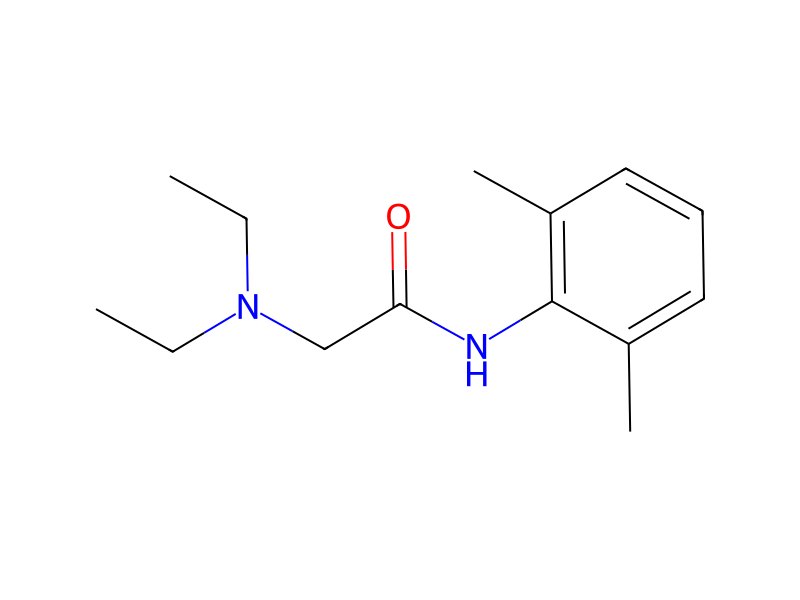

実験手順
In this Example and Comparative Example, a solution with a pH of from about 4.0 to 5.5 of 4.0 weight % lidocaine hydrochloride in deionized water was prepared. The lidocaine hydrochloride solution contained a mixture of chloride ions and protonated lidocaine ions that were formed by dissociation of lidocaine hydrochloride in the solution. The lidocaine hydrochloride solution was injected into the component 12 in Example 4 and into the component 14 in Comparative Example 5. It is believed that the lidocaine hydrochloride solution was absorbed substantially uniformly into both the component 12 and the component 14 in Example 4. The amount of the lidocaine hydrochloride solution that was injected into the electrode of Example 4 was 4 cc, and the amount of the lidocaine hydrochloride solution that was injected into the electrode of Comparative Example 5 was 3 cc, as seen in Table 5 below.
出典と根拠
- ORDレコード
- ord-fdb616c817c8464fb7d56ca8650a865c
- 出典データセット
- uspto-grants-1999_01
- 特許番号
- US05857993
関連ノート
読み込み中…