反応式

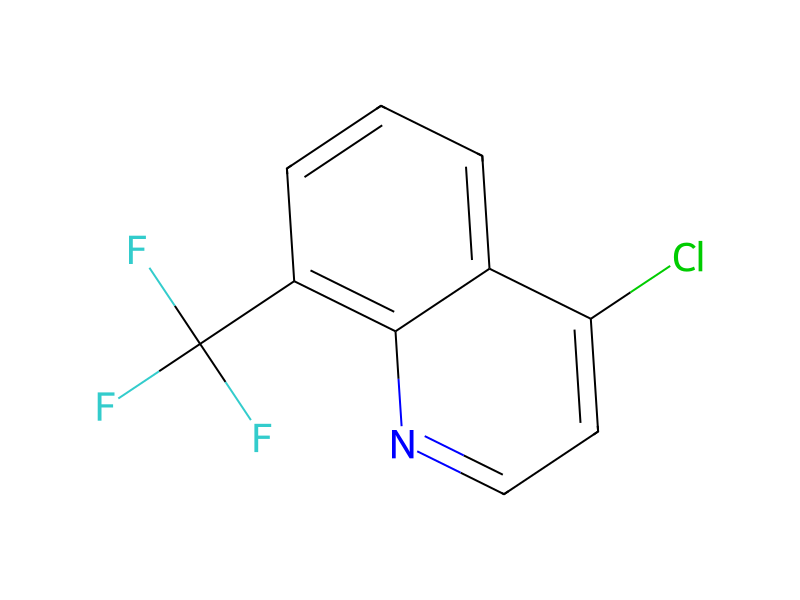
[C:1]([O:10][CH2:11][P:12]([CH3:15])([CH3:14])=[O:13])(=[O:9])[C:2]1[C:3](=[CH:5][CH:6]=[CH:7][CH:8]=1)[NH2:4].Cl[C:17]1[C:26]2[C:21](=[C:22]([C:27]([F:30])([F:29])[F:28])[CH:23]=[CH:24][CH:25]=2)[N:20]=[CH:19][CH:18]=1>C(O)(C)C.Cl>[F:30][C:27]([F:28])([F:29])[C:22]1[CH:23]=[CH:24][CH:25]=[C:26]2[C:21]=1[N:20]=[CH:19][CH:18]=[C:17]2[NH:4][C:3]1[C:2](=[CH:8][CH:7]=[CH:6][CH:5]=1)[C:1]([O:10][CH2:11][P:12]([CH3:15])([CH3:14])=[O:13])=[O:9]参加物
5




実験手順
4.6 grams (0.02 mol) of dimethylphosphinylmethyl anthranilate and 4.6 grams (0.02 mol) of 4-chloro-8-trifluoromethylquinoline are kept at 80° C for about 31/2 hours in 15 ml of isopropanol and 2.3 ml of concentrated aqueous hydrochloric acid. After removing the solvents and excess hydrochloric acid, the free base of the ester is liberated at 0° C. The dimethylphosphinyl-methyl N-(8-trifluoromethyl-4-quinolyl)-anthranilate obtained is identical to that prepared in Example (2a). Yield 7.6 grams (90% of theory).
後処理
- customare kept at 80° C for about 31
- customAfter removing the solvents and excess hydrochloric acid
- customis liberated at 0° C
出典と根拠
- ORDレコード
- ord-73834c741bfc439da9a72fcec4cc69fd
- 出典データセット
- uspto-grants-1978_05
- 特許番号
- US04091095
関連ノート
読み込み中…