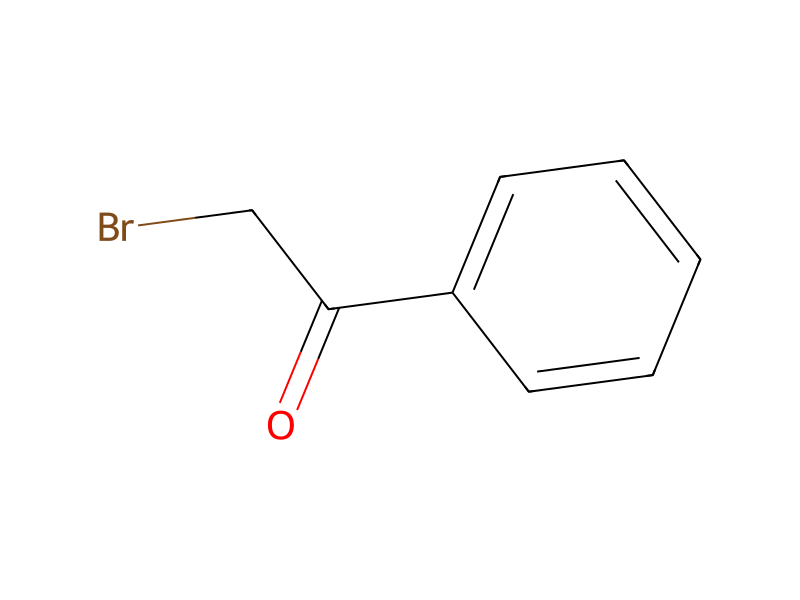
In a 100 mL Erlenmeyer flask were combined 10 g (0.05 mol) phenacyl bromide, 12.93 g (0.05 mol) sodium hexafluoroantimonate, 15 g (0.05 mol) methyl octadecyl sulfide and 40 mL methyl ethyl ketone (2-butanone). The reaction mixture was heated to boiling and maintained at this temperature for 30 minutes. During this time, sodium bromide was observed to precipitate. The reaction mixture was filtered to remove the inorganic salts and the resulting solution placed on a rotary evaporator to remove solvents. The product crystallized to give the desired salt, m.p. 80-82° C. Recrystallization from isopropanol gave a very light tan salt with a melting point of 79-80° C.