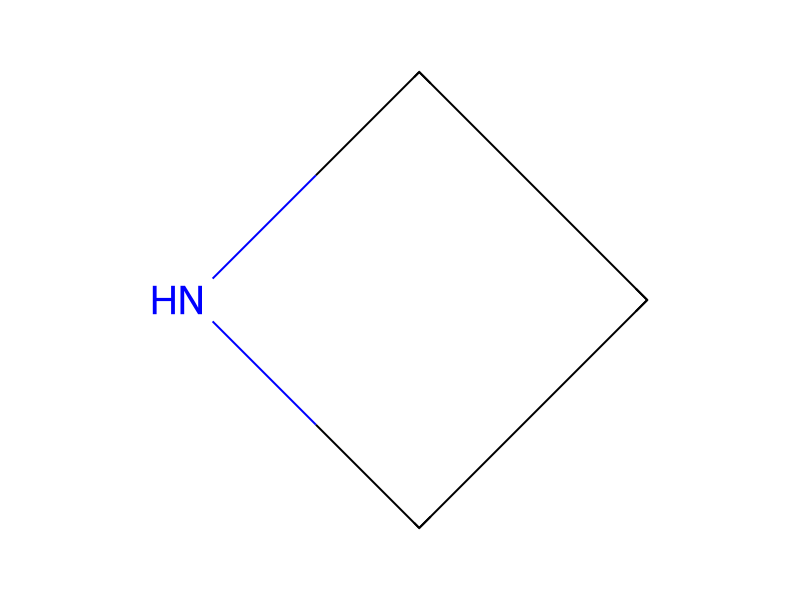
Azetidine → 2-(6-Azetidin-1-ylpyrimidin-4-yl)-4-pyridin-3-yl-1,2-dihydro-3H-pyrazol-3-one
反応式

Cl[C:2]1[N:7]=[CH:6][N:5]=[C:4]([N:8]2[C:12](=[O:13])[C:11]([C:14]3[CH:15]=[N:16][CH:17]=[CH:18][CH:19]=3)=[CH:10][NH:9]2)[CH:3]=1.[NH:20]1[CH2:23][CH2:22][CH2:21]1>C(O)C>[N:20]1([C:2]2[N:7]=[CH:6][N:5]=[C:4]([N:8]3[C:12](=[O:13])[C:11]([C:14]4[CH:15]=[N:16][CH:17]=[CH:18][CH:19]=4)=[CH:10][NH:9]3)[CH:3]=2)[CH2:23][CH2:22][CH2:21]1参加物
4



実験手順
150 mg (0.5 mmol) of the compound from Example 23 and 63 mg (1 l mmol) of azetidine are suspended in 4 ml of ethanol and reacted at 120° C. in a single-mode microwave oven (CEM Explorer) for 40 min. The solid is filtered off, washed twice with in each case 0.5 ml of ethanol and discarded. The mother liquor is combined with the wash solutions, and the solvent is removed on a rotary evaporator. The residue is purified by preparative HPLC (RP18 column; mobile phase: acetonitrile/water gradient with addition of 0.1% TFA). The product-containing fractions are combined and concentrated on a rotary evaporator. The residue is stirred under reflux in ethanol for 20 min and then filtered off while still hot. The solid obtained is dried under high vacuum.