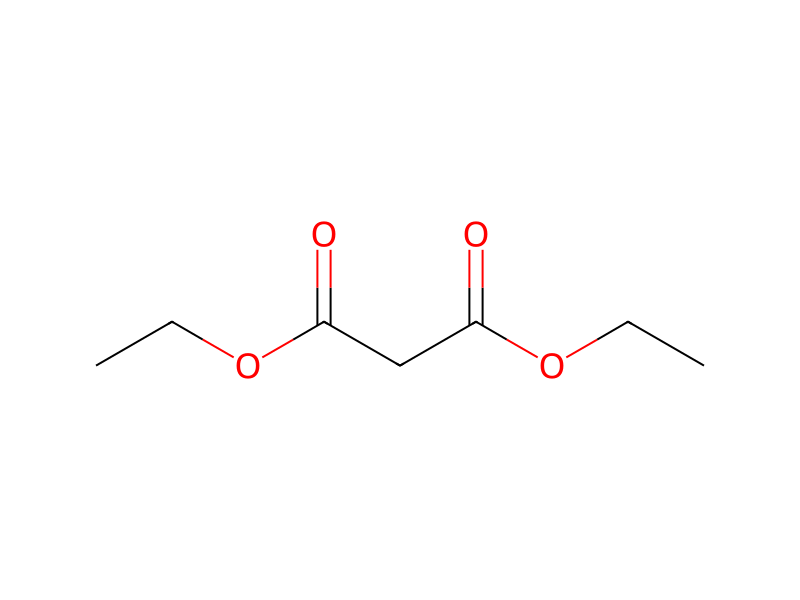
Br[C:2]1[CH:7]=[CH:6][CH:5]=[C:4]([O:8][CH3:9])[N:3]=1.N1C=CC=CC=1C(O)=O.C(=O)([O-])[O-].[Cs+].[Cs+].[C:25]([O:33][CH2:34][CH3:35])(=[O:32])[CH2:26][C:27]([O:29][CH2:30][CH3:31])=[O:28].[NH4+].[Cl-]>O1CCOCC1.[Cu]I.C(OCC)(=O)C>[CH3:9][O:8][C:4]1[N:3]=[C:2]([CH:26]([C:27]([O:29][CH2:30][CH3:31])=[O:28])[C:25]([O:33][CH2:34][CH3:35])=[O:32])[CH:7]=[CH:6][CH:5]=1A slurry of 2-bromo-6-methoxypyridine (1.8 g, 9.57 mmol), copper(I) iodide (0.16 g, 0.86 mmol), 2-picolinic acid (0.21 g, 1.72 mmol), cesium carbonate (4.7 g, 14.4 mmol) and diethyl malonate (4.4 mL, 28.7 mmol) in dioxane (15 mL) was heated at 95° C. for 4 days. After cooling to room temperature, ethyl acetate and saturated aqueous NH4Cl were added. The organic phase was separated and the aqueous phase extracted with ethyl acetate. The combined organic phases were dried over Na2SO4 and concentrated. The product was purified twice by flash chromatography (SiO2; heptane/ethyl acetate, gradient 0-80% and second chromatography using heptane/ethyl acetate gradient 0-20%) giving the product.