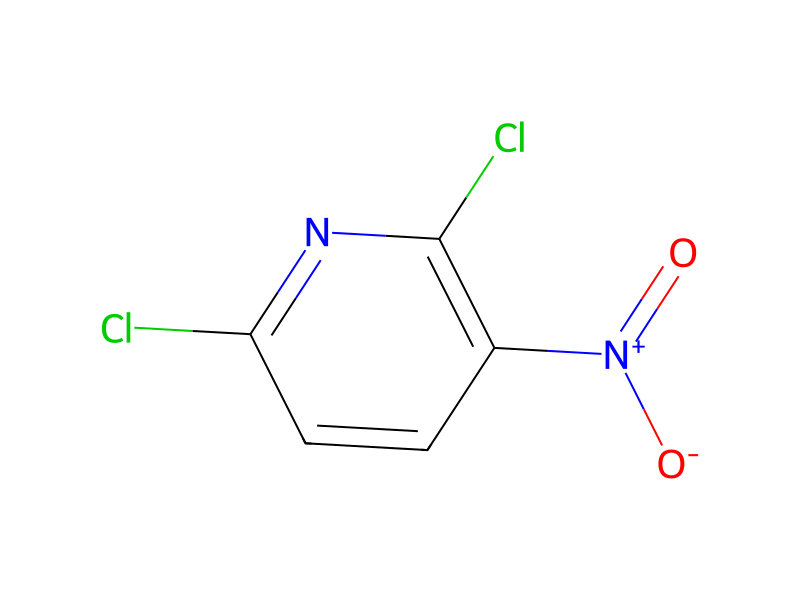
To a solution of 0.50 g of 2,6-dichloro-3-nitropyridine in 5 mL of acetonitrile, 0.43 g of potassium carbonate was added, thereto was added a solution of 0.24 mL of 2-aminomethyl-1,3-dioxolan in 3 mL of acetonitrile under cooling with ice, and the mixture was stirred for 2 hours under cooling with ice. Thereto was further added 80 μL of 2-aminomethyl-1,3-dioxolan, and the mixture was stirred for 2 hours under cooling with ice. Water and ethyl acetate were added thereto under cooling with ice, the organic layer was separated, washed with a saturated aqueous sodium chloride solution and dried over anhydrous sodium sulfate, and the solvent was distilled off under reduced pressure. The resultant residue was purified by basic silica gel column chromatography using an eluent of hexane:ethyl acetate=20:1 to obtain 0.44 g of 6-chloro-N-(1,3-dioxolan-2-ylmethyl)-3-nitropyridin-2-amine as a yellow solid.