Potassium Carbonate → 3-(Pyridin-3-yl)benzoic acid
反応式

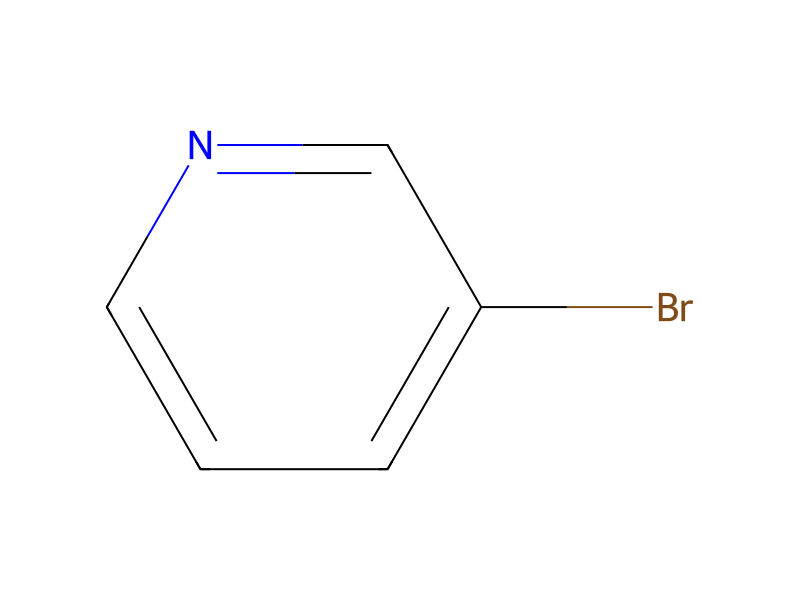
B([C:4]1[CH:5]=[C:6]([CH:10]=[CH:11][CH:12]=1)[C:7]([OH:9])=[O:8])(O)O.Br[C:14]1[CH:15]=[N:16][CH:17]=[CH:18][CH:19]=1.C(=O)([O-])[O-].[K+].[K+]>C(#N)C.O.Cl[Pd](Cl)([P](C1C=CC=CC=1)(C1C=CC=CC=1)C1C=CC=CC=1)[P](C1C=CC=CC=1)(C1C=CC=CC=1)C1C=CC=CC=1>[N:16]1[CH:17]=[CH:18][CH:19]=[C:14]([C:4]2[CH:5]=[C:6]([CH:10]=[CH:11][CH:12]=2)[C:7]([OH:9])=[O:8])[CH:15]=1参加物
7






実験手順
To a solution of 3-boronobenzoic acid (1.5 g, 9 mmol) and 3-bromopyridine (1.5 g, 9.9 mmol) in acetonitrile (40 mL) and water (40 mL), potassium carbonate (5.5 g, 40 mmol), Bis(triphenylphosphine)palladium(II) chloride (400 mg, 0.37 mmol) was added. The mixture was stirred under reflux overnight. Then the hot suspension was filtered and concentrated to half of the original volume and washed with dichloromethane. The aquatic phase was adjusted to pH=3 with hydrochloric acid (1 M) and filtrated, washed with water. The residue was dried in vacuum to obtain 1.5 g of 3-(pyridin-3-yl)benzoic acid. Yield: 83%. LC-MS (ESI) m/z: 200 (M+1)+.
後処理
- temperatureunder reflux overnight
- filtrationThen the hot suspension was filtered
- concentrationconcentrated to half of the original volume
- washwashed with dichloromethane
- filtrationfiltrated
- washwashed with water
- customThe residue was dried in vacuum
出典と根拠
- ORDレコード
- ord-813d26f59d694dd4a16e97d2962e7b22
- 出典データセット
- uspto-grants-2012_01
- 特許番号
- US08088760B2
反応ノート
読み込み中…