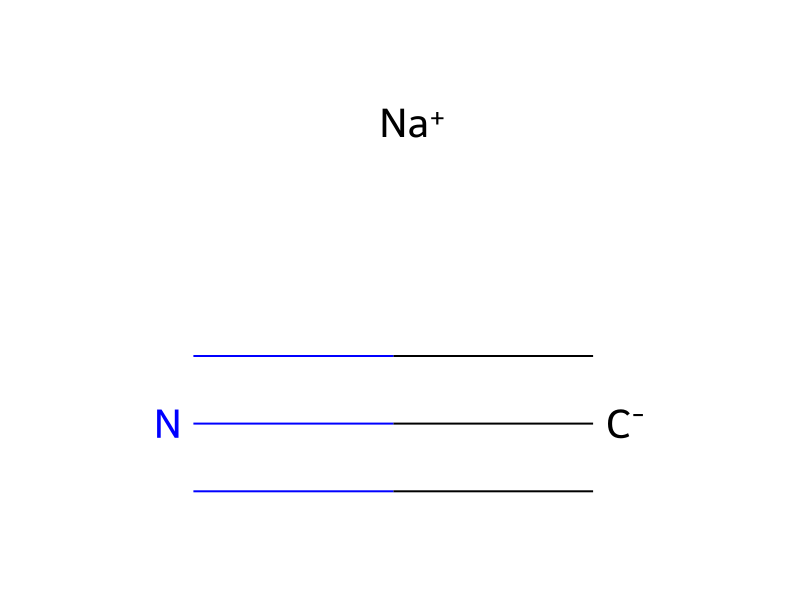
To a 3-necked jacketed 3 L flask equipped with a mechanical stirrer and connected to an automatic titrater by a pH electrode and a feeding tube for addition of base, was charged H20 (1200 mL), NaCN (37.25 g) and NaH2PO4 (125 g) to bring the solution to pH 7. The water circulator was set to 40° C. After 10 minutes, halohydrin dehalogenase SEQ ID NO: 32 as cell lysate (250 mL) was added. The reaction mixture was allowed to stir for 5 minutes. Using an addition funnel, ethyl(S)-4-chloro-3-hydroxybutyrate (45 g) was slowly added over 1 hour. The pH was maintained at 7 by the automatic titrater by the addition of 10 M NaOH (27 mL) over 17 hours. Subsequently, gas chromatography of a reaction sample showed complete conversion to product. Celite (16 g) was added to the flask, which was then connected to a diaphragm pump, whose exhaust is bubbled into 5M NaOH (200 mL), to remove HCN. The mixture was heated to 60° C. under 100 mm Hg pressure. After 1 hour, a submerged air bubbler was added to the solution to aid the removal of the HCN. After 3 hours, an HCN detector indicated less than 5 ppm HCN in the off-gas. The mixture was allowed to cool to room temperature, then filtered through a celite pad. The filtrate was extracted with butyl acetate (3×800 mL) and the combined organic layers filtered through a pad of activated charcoal. The solvent was removed under vacuum by rotary evaporation to provide 28.5 g of ethyl(R)-4-cyano-3-hydroxybutyrate. The purity was 98% (w/w) by HPLC and the enantiomeric excess was >99% (by chiral GC, the S enantiomer was undetectable). As used herein, the term “enantiomeric excess” or “e.e.” refers to the absolute difference between the mole or weight fractions of major (F(+)) and minor (F(−)) enantiomers (i.e., |F(+)−F(−)|), where F(+)+F(−)=1. Percent e.e. is 100×|F(+)−F(−)|. Enantiomeric composition can be readily characterized by using the gas chromatography method described in Example 6, above, and using methods that are known in the art.