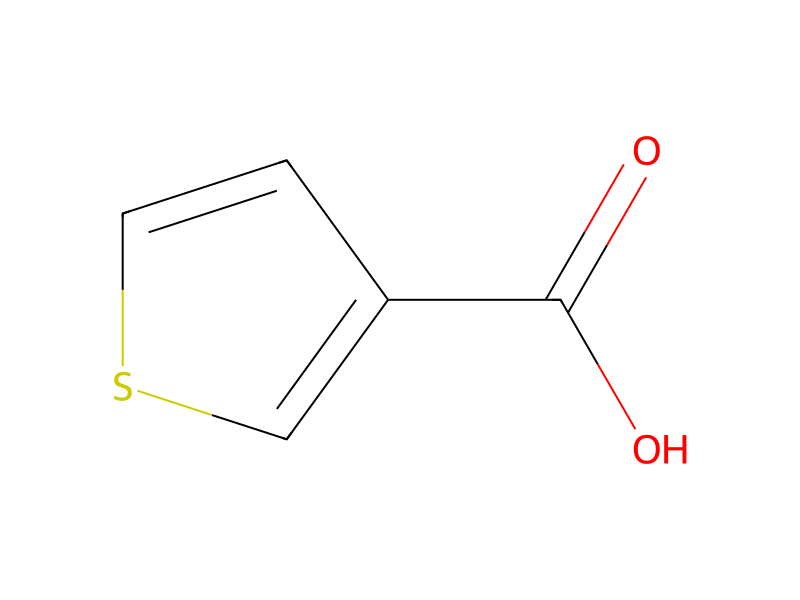
Commercially available 3-thiophene carboxylic acid (166.5 mg; 1.30 mmol) was suspended in dichloromethane (7 ml), and commercially available 1-(3-dimethylaminopropyl)-3-ethylcarbodiimide hydrochloride (252.8 mg; 1.32 mmol) was added. This mixture was allowed to stir at ambient temperature for 1 hour. Ethyl nipecotate (201 μl; 1.3 mmol) was then added, and stirring was continued for approximately 18 hours. The reaction mixture was then diluted with fresh dichloromethane and washed with water. The dichloromethane was dried with anhydrous potassium carbonate and evaporated at ambient temperature under reduced pressure. The crude material was purified by high-vacuum distillation at approximately 225° C./0.1 torr, and further by chromatography on silica, eluting with 50% ethyl acetate in hexane, giving ethyl 1-(3-thiophenecarbonyl)-3-piperidinecarboxylate (66.3 mg) as a colorless oil. MS m/z (positive ion) 268 (MH+; 100).