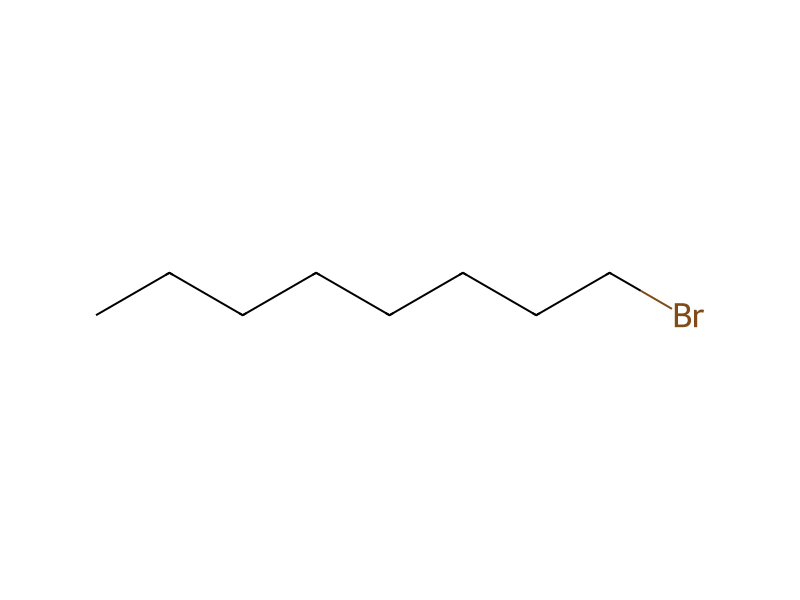
1-Bromooctane → (s)-2-[4-n-Octyloxyphenyl]-5-[6-methyloctyl]pyrimidine
反応式
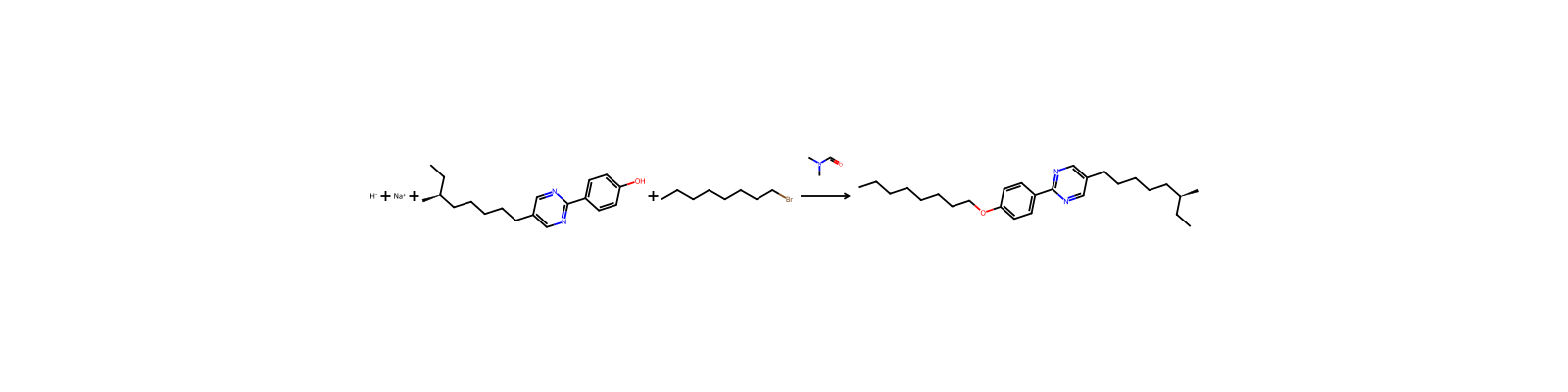
[H-].[Na+].[CH3:3][C@@H:4]([CH2:23][CH3:24])[CH2:5][CH2:6][CH2:7][CH2:8][CH2:9][C:10]1[CH:11]=[N:12][C:13]([C:16]2[CH:21]=[CH:20][C:19]([OH:22])=[CH:18][CH:17]=2)=[N:14][CH:15]=1.Br[CH2:26][CH2:27][CH2:28][CH2:29][CH2:30][CH2:31][CH2:32][CH3:33]>CN(C)C=O>[CH2:26]([O:22][C:19]1[CH:20]=[CH:21][C:16]([C:13]2[N:12]=[CH:11][C:10]([CH2:9][CH2:8][CH2:7][CH2:6][CH2:5][C@@H:4]([CH3:3])[CH2:23][CH3:24])=[CH:15][N:14]=2)=[CH:17][CH:18]=1)[CH2:27][CH2:28][CH2:29][CH2:30][CH2:31][CH2:32][CH3:33]参加物
5




実験手順
Pour 0.33 g of sodium hydride (about 50% oil suspension), 3 ml of dry N,N-dimethylformamide into a 30 ml three-mouth flask equipped with a cooling tube, thermometer, dripping funnel, and calcium chloride tube. Next, slowly drip 1.71 g of optically active (s)-4-[5-(6-methyl octyl)-2-pyrimidinyl]phenol which is dissolved in 6 ml of dry N,N-dimethylformamide, into the flask at room temperature. Furthermore, after reacting it for 30 minutes, add 1.10 g of 1-bromoctane, allow to react for 7 hours at 90° C. After the reaction, pour the mixture into ice water, then extract the product with ethyl acetate. The organic layer is thoroughly washed with water, dried, the organic solvent is evaporated and removed, and then the impure product is obtained. This impure product is refined with silica gel chromatography, and recrystallized to obtain 1.3 g of optically active (s)-2-[4-n-octyloxyphenyl]-5-[6-methyloctyl]pyrimidine.