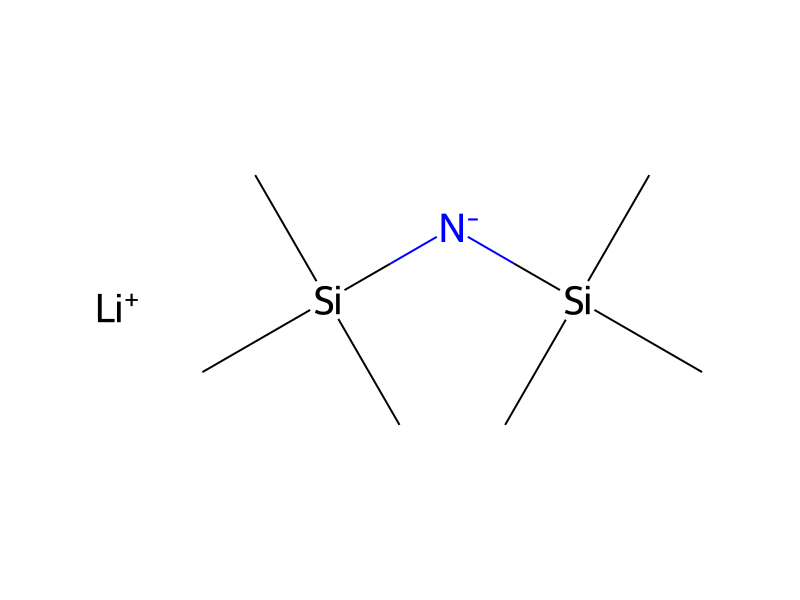
Cyanide 3 (0.86 g, 7.1 mmol) in THF (30 mL) was added dropwise over 1 hour to a stirring mixture of lithium hexamethyldisilazide (7.8 mL of a 1 M solution in THF, 7.8 mmol) in THF (40 mL) at −78° C. under argon. The mixture was allowed to warm to −40° C. and stirred for 2 hours. The mixture was cooled to −78° C. and dimethylallyl bromide (1.3 mL, 10.6 mmol) was added. The mixture was stirred for a further 2 hours at −78° C. and then allowed to warm to room temperature overnight. Saturated ammonium chloride solution (20 mL) was added, and the mixture was diluted with ether (50 mL) and dilute hydrochloric acid (30 mL). The aqueous layer was further extracted with ether (2×50 mL), and the combined 15 organic fractions were washed with brine, dried (MgSO4), and the solvent was evaporated under reduced pressure. The residue was chromatographed (SiO2, heptane-ethyl acetate, 98:2) to give the cyanoalkene 4 (0.96 g, 72%) as a colorless oil; Rf(heptane-ethyl acetate, 95:5) 0.38; νmax(film)/cm−1 2230 (CN),1673 (C═C); δH (400 MHz; CDCl3) 5.27 (1H, tt, J 7.6, 1.3, CHCMe2), 2.89 (2H, m), 2.30–2.22 (4H, m), 2.10 (2H, d, J 14.2), 1.94 (2H, m), 1.84–1.62 (2H, m), 1.65 (3 H, s, Me), 1.55 (3H, s, Me); m/z (AP+) 190 (M+H, 100%).