反応式
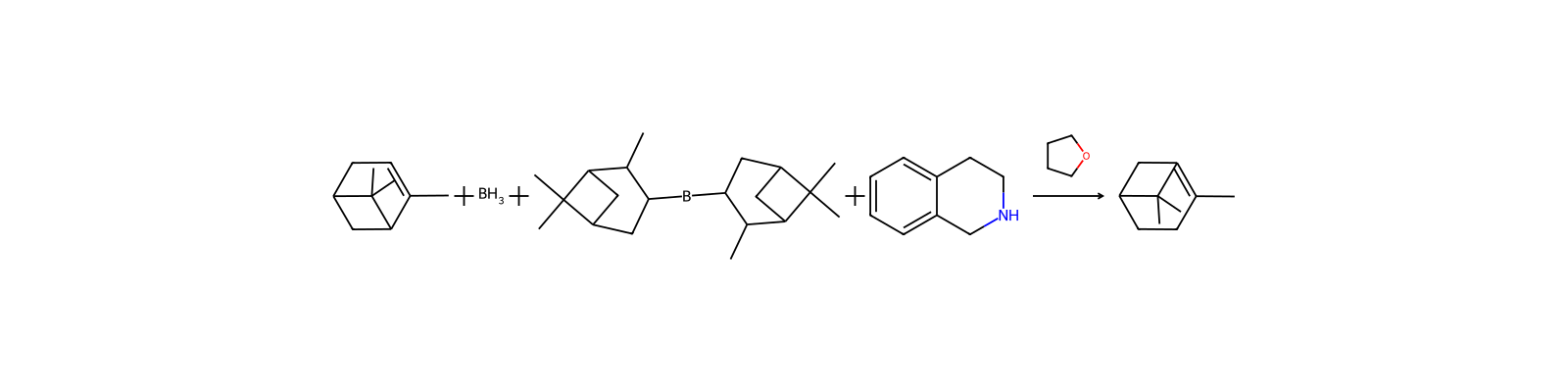
[CH3:1][C:2]1[CH:7]2[C:8]([CH3:10])([CH3:9])[CH:5]([CH2:6]2)[CH2:4][CH:3]=1.B.[B](C1C(C)C2C(C)(C)C(C2)C1)C1C(C)C2C(C)(C)C(C2)C1.C1C2C(=CC=CC=2)CCN1>O1CCCC1>[C:7]12[CH2:6][CH:5]([C:8]1([CH3:10])[CH3:9])[CH2:4][CH2:3][C:2]=2[CH3:1]参加物



実験手順
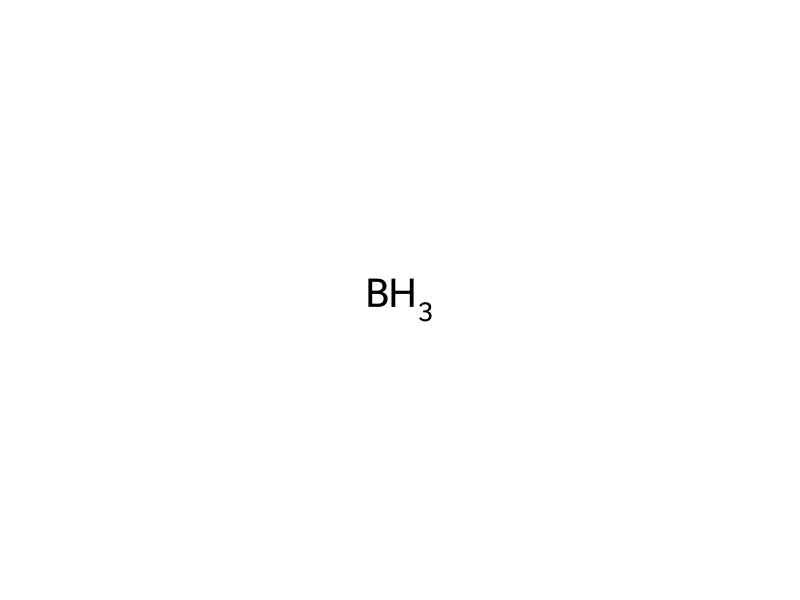
Another way to accomplish this assymetric reduction of compound 4' to optically active tetrahydroisoquinolines is to reduce the compound in tetrahydrofuran with the reagent which is obtained by reacting 2 moles of optically active alpha pinene with borane in tetrahydrofuran. The solution of the diisopinocampheylborane functions as the reducing agent in the reduction of the intermediate 4' to chiral tetrahydroisoquinoline. Basically, the compound 4' is treated with a slight excess of this reagent produced from optically active pinene and BH3 in tetrahydrofuran followed by evaporation and treatment with HCl which decomposes a complex and gives the hydrochloride of the tetrahydroisoquinoline in the aqueous phase. The base can then be recovered from the aqueous phase by treatment with ammonia and methanol as above.
後処理
- customis obtained
出典と根拠
- ORDレコード
- ord-bc81acde98bc4b1fabc531c70cdf4325
- 出典データセット
- uspto-grants-1988_02
- 特許番号
- US04727146
関連ノート
読み込み中…