反応式
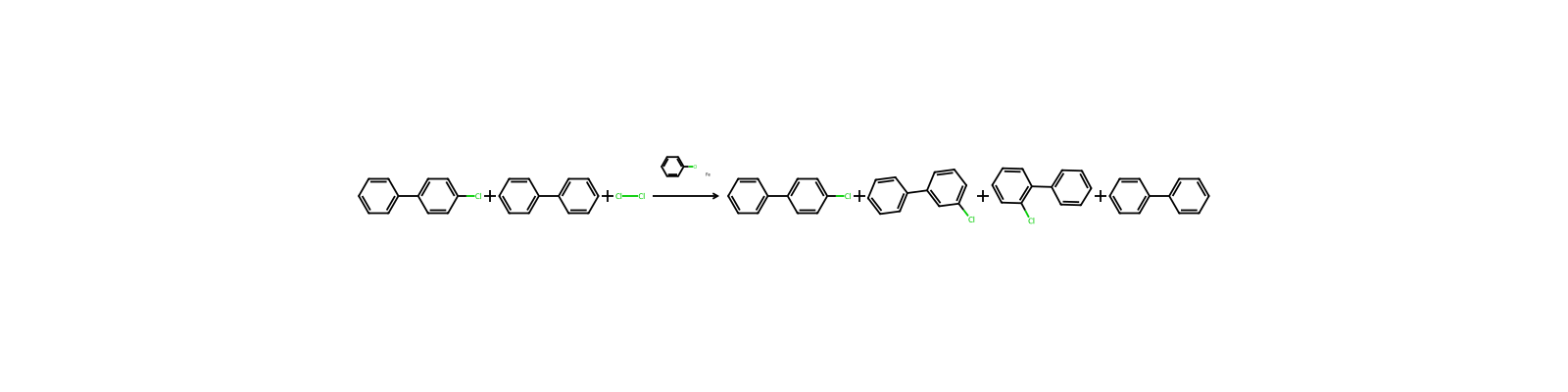
[Cl:1][C:2]1[CH:7]=[CH:6][C:5]([C:8]2[CH:13]=[CH:12][CH:11]=[CH:10][CH:9]=2)=[CH:4][CH:3]=1.[C:14]1([C:20]2[CH:25]=[CH:24][CH:23]=[CH:22][CH:21]=2)[CH:19]=[CH:18][CH:17]=[CH:16][CH:15]=1.[Cl:26]Cl>ClC1C=CC=CC=1.[Fe]>[Cl:1][C:2]1[CH:3]=[CH:4][C:5]([C:8]2[CH:13]=[CH:12][CH:11]=[CH:10][CH:9]=2)=[CH:6][CH:7]=1.[Cl:1][C:16]1[CH:15]=[C:14]([C:20]2[CH:21]=[CH:22][CH:23]=[CH:24][CH:25]=2)[CH:19]=[CH:18][CH:17]=1.[Cl:26][C:6]1[CH:7]=[CH:2][CH:3]=[CH:4][C:5]=1[C:8]1[CH:13]=[CH:12][CH:11]=[CH:10][CH:9]=1.[C:5]1([C:8]2[CH:9]=[CH:10][CH:11]=[CH:12][CH:13]=2)[CH:6]=[CH:7][CH:2]=[CH:3][CH:4]=1参加物





実験手順
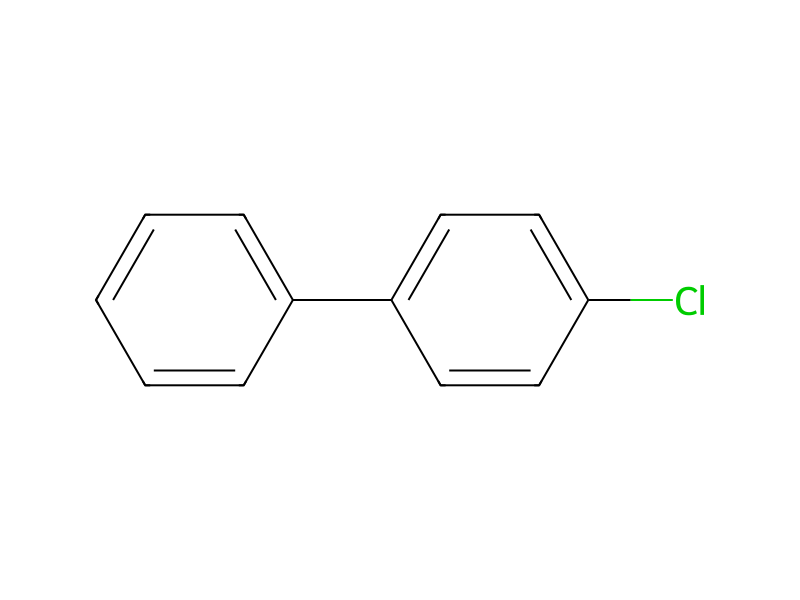
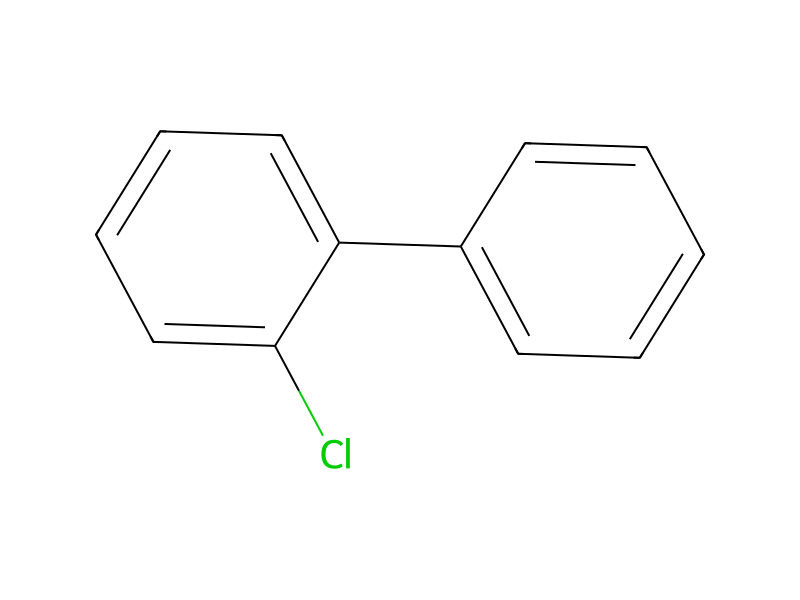
It would be desirable to be able to prepare 4-chlorobiphenyl in a single step from biphenyl and chlorine. According to U.S. Pat. No. 1,890,427, this is possible by chlorination of biphenyl in chlorobenzene in the presence of metallic iron as catalyst. However, this gives a mixture comprising 4-chlorobiphenyl, 3-chlorobiphenyl, 2-chlorobiphenyl and unreacted biphenyl. The separation of this mixture is very complicated. For separating off one isomer, the reference describes crystallization from noneutectic mixtures above the freezing point of the eutectic. This means that separation of the entire mixture makes it necessary to carry out a complicated sequence of distillation and crystallization steps. Czech. Chem. Prum., 30(10), 529-32 (1980) confirms this. To achieve purities of greater than 99%, the latter reference describes the following steps to be carried out in succession for the separation of mixtures comprising 2-, 3- and 4-chlorobiphenyl: 1. distillation, 2. crystallization of the fractions from the distillation and 3. recrystallization of the fractions from the crystallization from ethanol.
出典と根拠
- ORDレコード
- ord-ae882cb1dfff490a8f85983c7aca00aa
- 出典データセット
- uspto-grants-2004_03
- 特許番号
- US06710217B1
関連ノート
読み込み中…