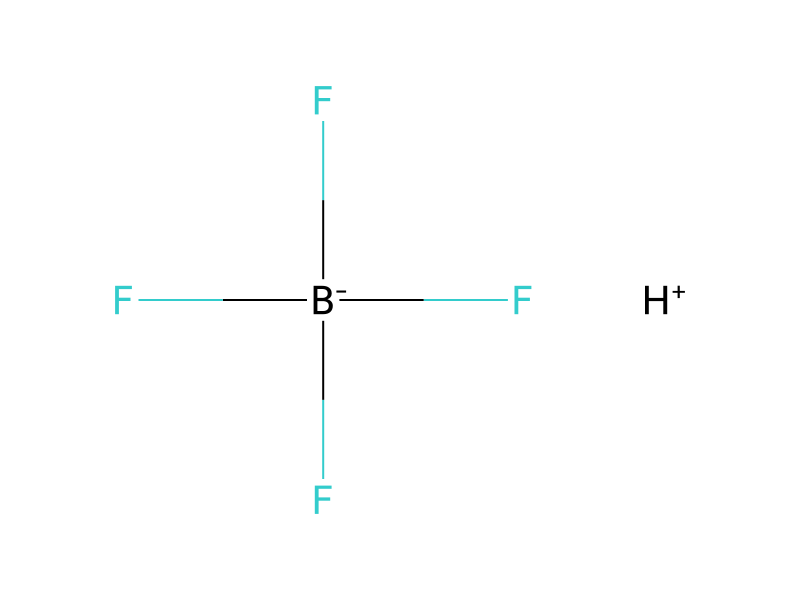
Tetrafluoroboric acid → HCID 86761168、化合物
反応式

[Cl-].N[C:3]1[C:4]([CH3:25])=[CH:5][C:6]2[C:15]([CH:16]=1)=[N+:14]([C:17]1[CH:22]=[CH:21][CH:20]=[CH:19][CH:18]=1)[C:13]1[C:8](=[CH:9][C:10]([CH3:24])=[C:11]([NH2:23])[CH:12]=1)[N:7]=2.[F:26][B-:27]([F:30])([F:29])[F:28].[H+].[S-:32][C:33]#[N:34].[Na+].N([O-])=O.[Na+]>>[F:26][B-:27]([F:30])([F:29])[F:28].[NH2:23][C:11]1[CH:12]=[C:13]2[C:8](=[CH:9][C:10]=1[CH3:24])[N:7]=[C:6]1[C:15]([CH:16]=[C:3]([S:32][C:33]#[N:34])[C:4]([CH3:25])=[CH:5]1)=[N+:14]2[C:17]1[CH:22]=[CH:21][CH:20]=[CH:19][CH:18]=1参加物
5




反応条件
- 温度
- 50 °C
実験手順
1 g of 3,7-diamino-2,8-dimethyl-5-phenyl-phenazinium chloride were suspended in 15 ml of 50 wt.-% tetrafluoroboric acid and heated to 50° C. Then, 10 ml of an aqueous solution consisting of 1.109 g sodium thiocyanate and 454 mg of sodium nitrite were added dropwise over one hour at a temperature of 50 to 60° C. and thereafter stirred for another hour at this temperature. The reaction formulation was cooled down to room temperature, the resulting black solid matter was filtered away and dried. The yield was 812 mg (64.0% of the theory).