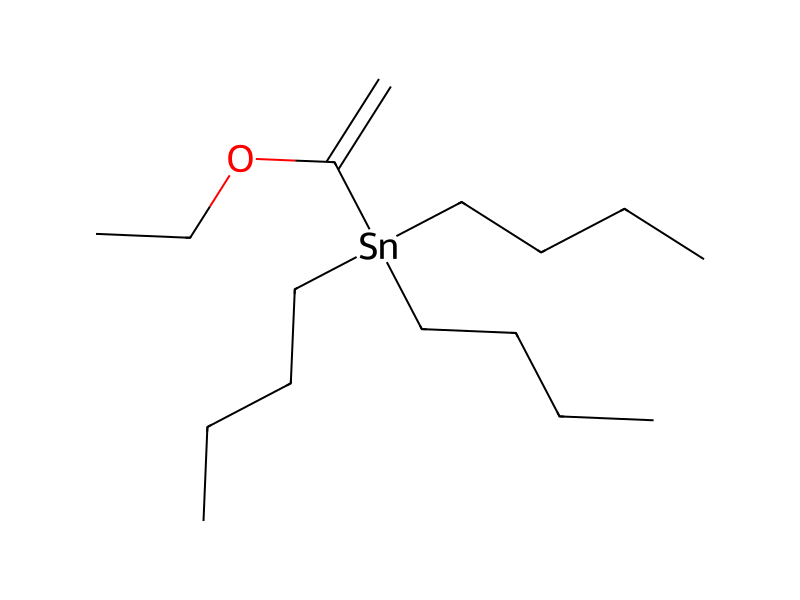
To a microwave vial was added 1-(6-bromo-pyridin-3-yl)-4,4-difluoro-cyclohexanecarbonitrile (276 mg, 0.918 mmol), tributyl(1-ethoxyvinyl)tin (663 mg, 1.84 mmol), copper iodide (26.2 mg, 0.138 mmol), PdCl2(PPh3)2 (32.2 mg, 0.0459 mmol) and acetonitrile (7.3 mL). The vial was purged under nitrogen, capped then heated in an oil bath at 80° C. for 16 hours. After cooling to room temperature the crude reaction mixture was filtered through celite with acetonitrile and the volatiles were then removed under reduced pressure. The residue obtained was dissolved in 1,4-dioxane (20 mL), treated with 1.5; N aqueous HCl (20 mL) and stifled vigorously at room temperature for 1.5 hours. The mixture was then made basic by adding solid potassium carbonate and transferred to a 250-mL separatory funnel with water (50 mL). The aqueous layer was extracted with AcOEt (3×50 mL). The combined organic layers were washed with brine, dried over sodium sulfate, filtered and concentrated under reduced pressure. The residue obtained was treated with a saturated solution of potassium fluoride in methanol (6 mL), stifled for a few minutes, diluted with DCM, adsorbed onto silica gel and purified by silica gel chromatography to afford 1-(6-acetyl-pyridin-3-yl)-4,4-difluoro-cyclohexanecarbonitrile as a white solid (178 mg, 73%). LC-MS (m/z) 265.0 (MH+); tR=1.21. 11-1 NMR (300 MHz, CDCl3) δ ppm 8.86 (d, J=2.0 Hz, 1 H), 8.09 (dd, J=8.3, 0.5 Hz, 1 H), 7.95 (dd, J=8.3, 2.5 Hz, 1 H), 2.73 (s, 3 H), 2.46-2.14 (m, 8 H).