Sodium hydride → 2-Chloro-5-[4-(3-bromophenoxy)-2-chlorophenoxy]methylpyridine
反応式
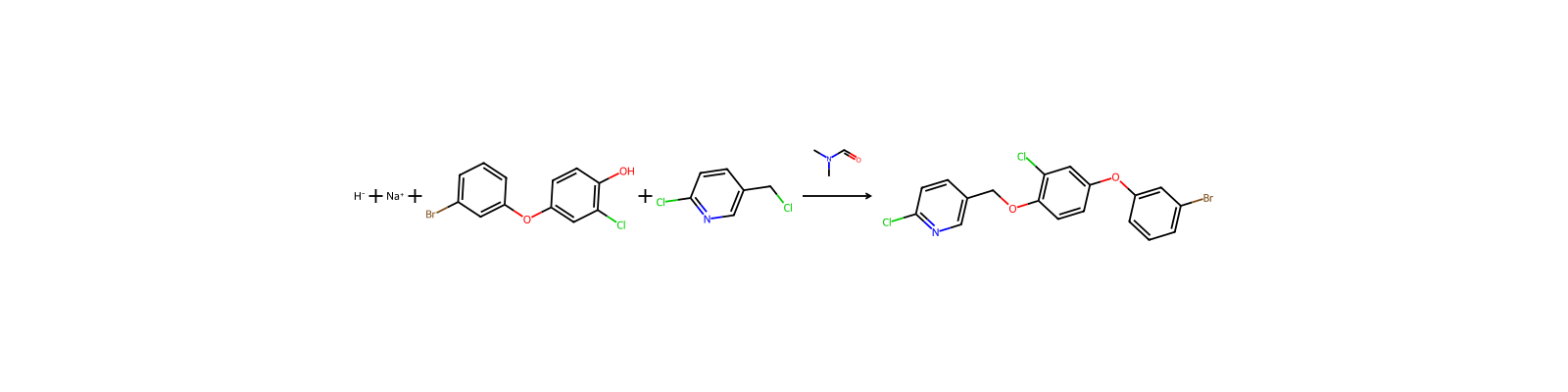
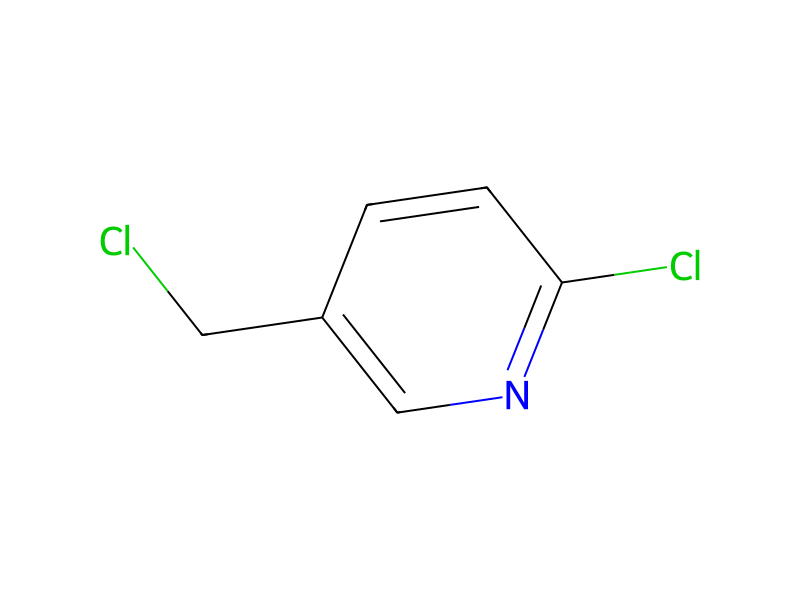
[H-].[Na+].[Cl:3][C:4]1[CH:9]=[C:8]([O:10][C:11]2[CH:16]=[CH:15][CH:14]=[C:13]([Br:17])[CH:12]=2)[CH:7]=[CH:6][C:5]=1[OH:18].[Cl:19][C:20]1[CH:25]=[CH:24][C:23]([CH2:26]Cl)=[CH:22][N:21]=1>CN(C)C=O>[Cl:19][C:20]1[CH:25]=[CH:24][C:23]([CH2:26][O:18][C:5]2[CH:6]=[CH:7][C:8]([O:10][C:11]3[CH:16]=[CH:15][CH:14]=[C:13]([Br:17])[CH:12]=3)=[CH:9][C:4]=2[Cl:3])=[CH:22][N:21]=1参加物
5




実験手順
To a solution of 0.07 g of sodium hydride (60% oil dispersion) in 10 ml of N,N-dimethylformamide, there is added dropwise a solution of 0.50 g of 2-chloro-4-(3-bromophenoxy)phenol in 3 ml of N,N-dimethylformamide with stirring and ice-cooling. After 30 minutes, a solution of 0.27 g of 2-chloro-5-chloromethylpyridine in 5 ml of N,N-dimethylformamide is added thereto at room tempearture, followed by stirrring at the same temperature for 10 hours. The reaction mixture is poured into ice-water and extracted twice with 100 ml of ethyl acetate. The extracts are combined together, washed with water, dried over anhydrous magnesium sulfate and concentrated under reduced pressure. The residue is subjected to silica gel chromatography to give 2-chloro-5-[4-(3-bromophenoxy)-2-chlorophenoxy]methylpyridine.