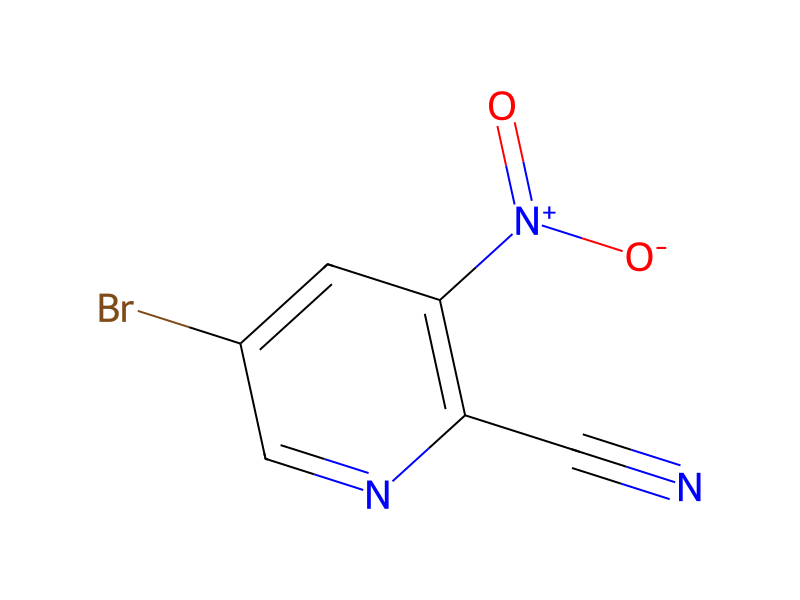
[CH2:1]([C:3]1[C:8]([OH:9])=[CH:7][CH:6]=[CH:5][N:4]=1)[CH3:2].[H-].[Na+].Br[C:13]1[CH:14]=[C:15]([N+]([O-])=O)[C:16]([C:19]#[N:20])=[N:17][CH:18]=1.[NH:24]1[CH:29]=[CH:28][CH:27]=[CH:26][C:25]1=[S:30]>CN(C=O)C>[CH2:1]([C:3]1[C:8]([O:9][C:15]2[C:16]([C:19]#[N:20])=[N:17][CH:18]=[C:13]([S:30][C:25]3[CH:26]=[CH:27][CH:28]=[CH:29][N:24]=3)[CH:14]=2)=[CH:7][CH:6]=[CH:5][N:4]=1)[CH3:2]2-Ethylpyridin-3-ol (27.5 g, 223 mmol) was dissolved in DMF (900 mL) and cooled in an ice bath. 60% Sodium hydride (8.93 g, 223 mmol) was added portionwise and stirred in an ice bath for 30 minutes. 5-Bromo-3-nitropicolinonitrile (50.9 g, 223 mmol) was added in one portion and the fraction was stirred in an ice bath for 1 hour. Pyridine-2(1H)-thione (24.8 g, 223 mmol) was added, followed by 60% sodium hydride (8.93 g, 223 mmol) and reaction was stirred in an ice bath slowly warming to ambient temperature overnight. The reaction was concentrated in vacuo to about 300 mL and poured into 3 L water with vigorous stirring. The mixture was extracted with EtOAc, washed with water and brine, dried over sodium sulfate, filtered and concentrated to afford 3-(2-ethylpyridin-3-yloxy)-5-(pyridin-2-ylthio)picolinonitrile (81 g, 242 mmol, 108% yield) as a dark oil.