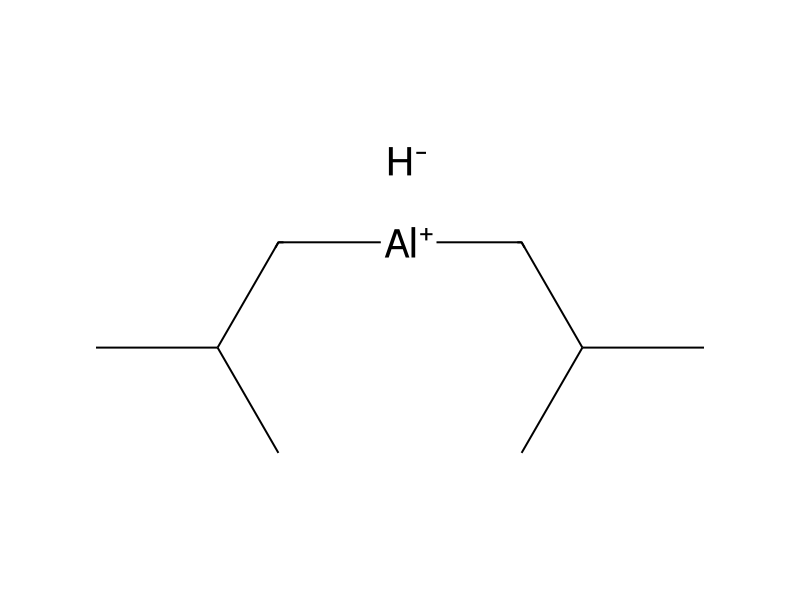
C[O:2][C:3]([C:5]1[CH:6]=[CH:7][C:8]([Br:15])=[C:9]2[O:13][C:12]([CH3:14])=[N:11][C:10]=12)=O.[H-].C([Al+]CC(C)C)C(C)C>O1CCCC1>[Br:15][C:8]1[C:9]2[O:13][C:12]([CH3:14])=[N:11][C:10]=2[C:5]([CH2:3][OH:2])=[CH:6][CH:7]=1To a solution of 7-bromo-2 methyl-benzo[d]oxazole-4-carboxylic acid methyl ester (8.64 g) in tetrahydrofuran (250 ml) was added dropwise a solution of diisobutylaluminium hydride (“DIBAL-H”) (1M in hexane) (80 ml) under a nitrogen atmosphere at 0° C. The reaction mixture was stirred at 0° C. for 20 minutes. Then the ice-bath was removed and the reaction mixture was allowed to warm to ambient temperature. After 40 minutes the mixture was cooled with an ice-bath and the reaction was quenched by the slow addition of water (5.0 ml). The mixture was poured onto aqueous sodium hydrogen carbonate (saturated) (300 ml) and extracted with diethyl ether (400 ml). The aqueous phase was further extracted with diethyl ether (2×300 ml). The combined organic extracts were washed with brine, dried over sodium sulfate and concentrated. The residue was triturated in a mixture of diisopropyl ether and heptane (3:1) to give (7-bromo-2-methyl-benzo[d]oxazol-4-yl)-methanol (4.45 g). 1H-NMR (400 MHz, CDCl3): 7.41 (d, 1H), 7.17 (d, 1H), 4.98 (s, 3H), 3.06 (s, 1H), 2.67 (s, 3H) ppm.