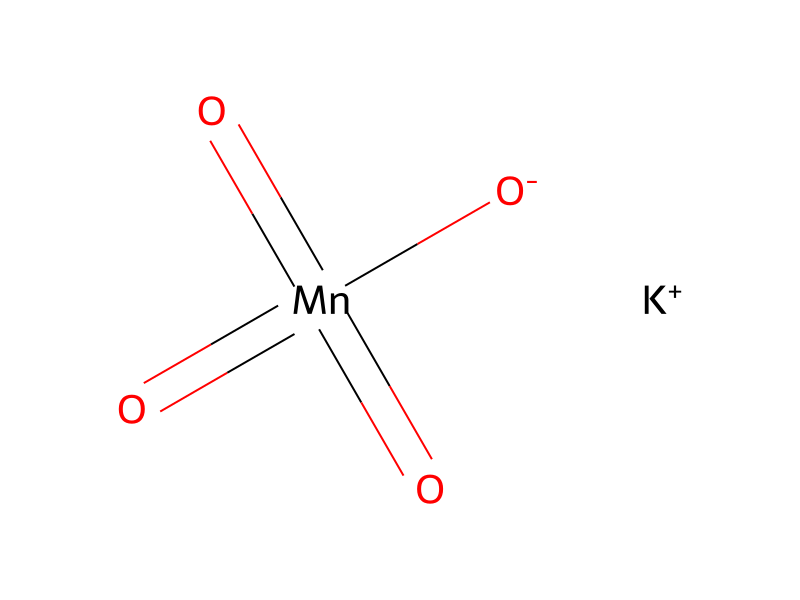
In a round bottom flask was placed sodium periodate (0.29 g, 1.36 mmol) in water (1.0 ml). To this was added a solution of 2(R)-(3-chloro-4-methylsulfanyl-phenyl)-3-(3-oxo-cyclobutyl)-propionic acid (prepared as in Example 93, 0.22 g, 0.74 mmol) in methanol (3 ml) and the reaction was stirred at 25° C. for 6 h. After this time, the solids were filtered off and the filtrate was concentrated in vacuo and azeotroped with acetonitrile (2×10 ml). The resulted in an off-white solid that was then dissolved in methanol (4 ml) and to this was added potassium permanganate (0.17 g, 1.07 mmol) in water (2 ml) and stirred at 25° C. for 5 h. After this time, there was still starting material present by HPLC so another portion of potassium permanganate (80 mg, 0.51 mmol) in water (1 ml) and it was stirred overnight. The reaction still showed starting material was not consumed but it was worked up anyway. The reaction was filtered through celite and washed with a solution of methanol/methylene chloride (1:1). The organics were concentrated in vacuo and azeotroped with acetonitrile (3×10 ml). Purification on an AnaLogix Intelliflash system (40 g column, 3% methanol/methylene chloride+1% acetic acid) afforded 2(R)-(3-chloro-4-methanesulfonyl-phenyl)-3-(3-oxo-cyclobutyl)-propionic acid (65 mg, 27%) as a white gummy solid: 1H NMR (300 MHz, DMSO-d6) δ ppm 1.93-2.32 (m, 3H, CH and CH2), 2.63-2.80 (m, 2H, 2×CH or 2×CH2), 2.90-3.13 (m, 2H, 2×CH or 2×CH2), 3.35 (s, 3H, SO2CH3), 3.72 (t, J=7.6 Hz, 1H, ArCHCO2), 7.58 (dd, Jm=1.6 Hz, Jo=8.2 Hz, 1H, Ar), 7.72 (d, Jm=1.6 Hz, 1H, Ar), 8.02 (d, Jo=8.2 Hz, 1 H, Ar), 12.81 (brs, 1H, CO2H).