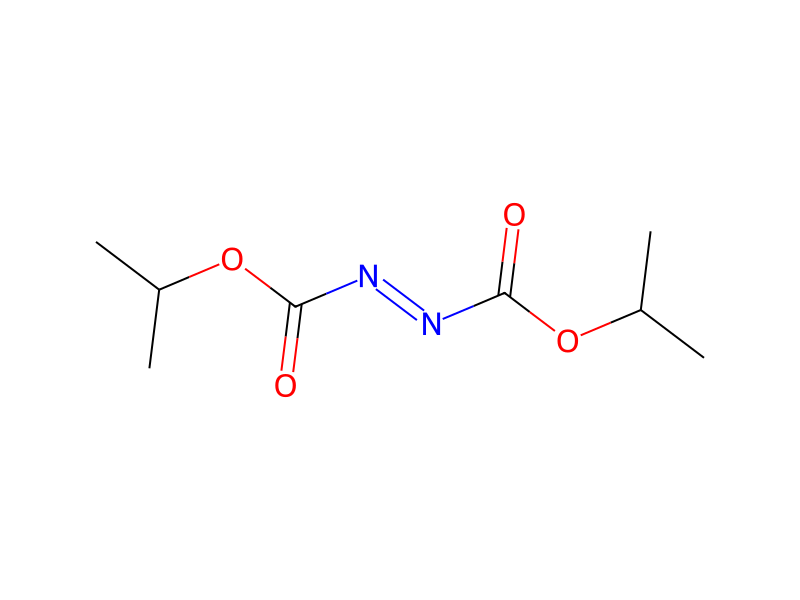
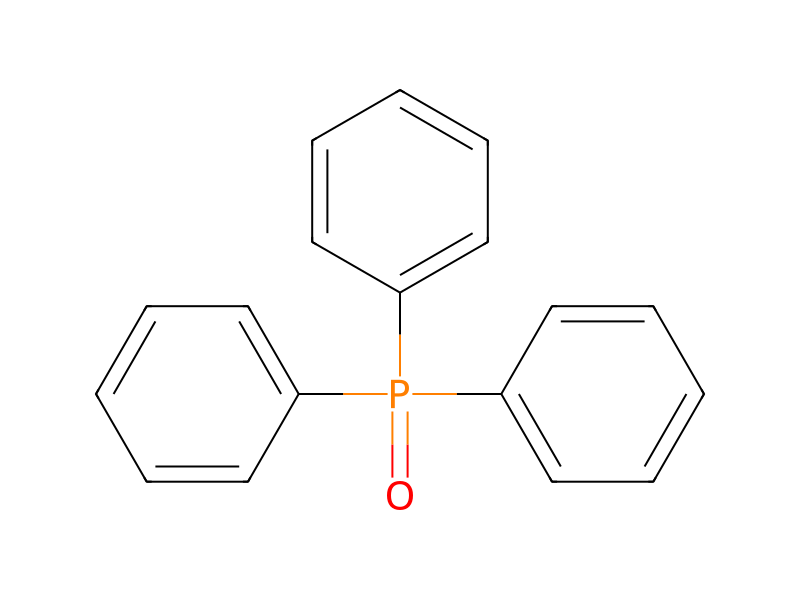
ClC1N=CN=C2C=1N=CN2[C@H]1[C@@H]2[O:16]C(C)(C)O[C@@H]2[C@@H](CO)C1.C(NS(=O)=O)(OC(C)(C)C)=O.[C:34]1([P:40]([C:47]2[CH:52]=[CH:51][CH:50]=[CH:49][CH:48]=2)[C:41]2[CH:46]=[CH:45][CH:44]=[CH:43][CH:42]=2)[CH:39]=[CH:38][CH:37]=[CH:36][CH:35]=1.N(C(OC(C)C)=O)=NC(OC(C)C)=O>CCOC(C)=O>[C:47]1([P:40](=[O:16])([C:34]2[CH:35]=[CH:36][CH:37]=[CH:38][CH:39]=2)[C:41]2[CH:46]=[CH:45][CH:44]=[CH:43][CH:42]=2)[CH:48]=[CH:49][CH:50]=[CH:51][CH:52]=1To a solution of ((3aR,4R,6R,6aS)-[6-(6-chloro-purin-9-yl)-2,2-dimethyltetrahydro-cyclopenta[1,3]dioxol-4-yl]-methanol (Yang, M.; Wei, Y.; Schneller, S. W. J. Org. Chem. 2004, 69, 3993-3996) (250.0 mg, 0.77 mmol), N-Boc-sulfonamide (226.6 mg, 1.16 mmol) and triphenylphosphine (242.3 mg, 0.92 mol) in EtOAc (8 mL) was added diisopropyl azodicarboxylate (227.3 μL, 1.16 mmol) dropwise as a solution in EtOAc (1 mL). The reaction was stirred at r.t. overnight, quenched with water and extracted with EtOAc. The organics were concentrated and the residue purified by flash chromatography (0 to 100% EtOAc/DCM) to obtain the product as an inseparable mixture with triphenylphosphine oxide. The material was carried on as such.