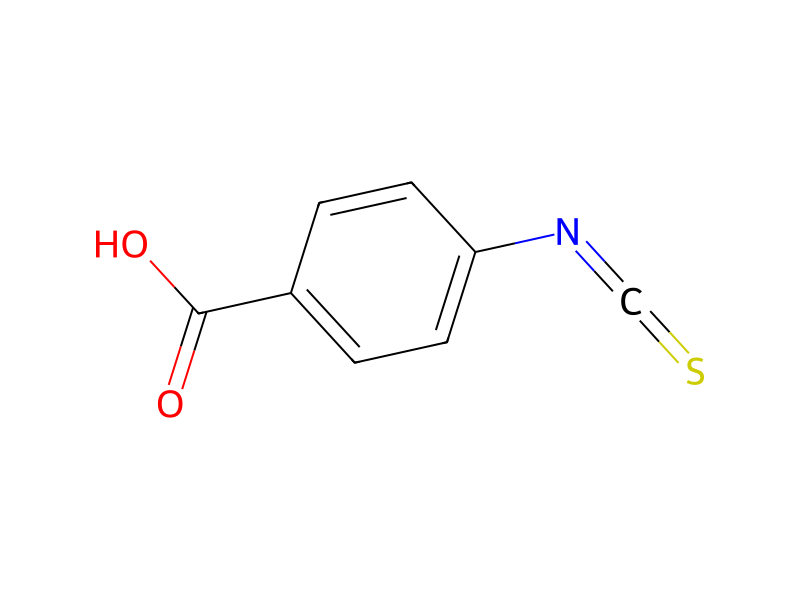
[N:1]([C:4]1[CH:12]=[CH:11][C:7]([C:8]([OH:10])=[O:9])=[CH:6][CH:5]=1)=[C:2]=[S:3].C(N(C(C)C)CC)(C)C.Cl.[NH:23]([CH2:25][C:26](OCC)=[O:27])[NH2:24]>ClCCl>[NH2:24][N:23]1[CH2:25][C:26](=[O:27])[N:1]([C:4]2[CH:12]=[CH:11][C:7]([C:8]([OH:10])=[O:9])=[CH:6][CH:5]=2)[C:2]1=[S:3]179 mg (1 mmol) of 4-isothiocyanatobenzoic acid and 523 μl (3 mmol) of diisopropylethylamine were stirred in 8 ml of dichloromethane and then with 155 mg (1 mmol) of ethyl hydrazinoacetate hydrochloride at room temperature for 96 hours. After the solvent was concentrated, the mixture was partitioned between ethyl acetate and 30% acetic acid. The aqueous layer was extracted with ethyl acetate again, and the organic layers were combined, washed with water and then with saturated aqueous sodium chloride, dried over magnesium sulfate and concentrated. The resulting solid was mixed with a 190:10:0.8 liquid mixture of ethyl acetate, methanol and acetic acid, and the insoluble was dried to obtain 132 mg of the desired product (yield 53%).

読み込み中…