反応式

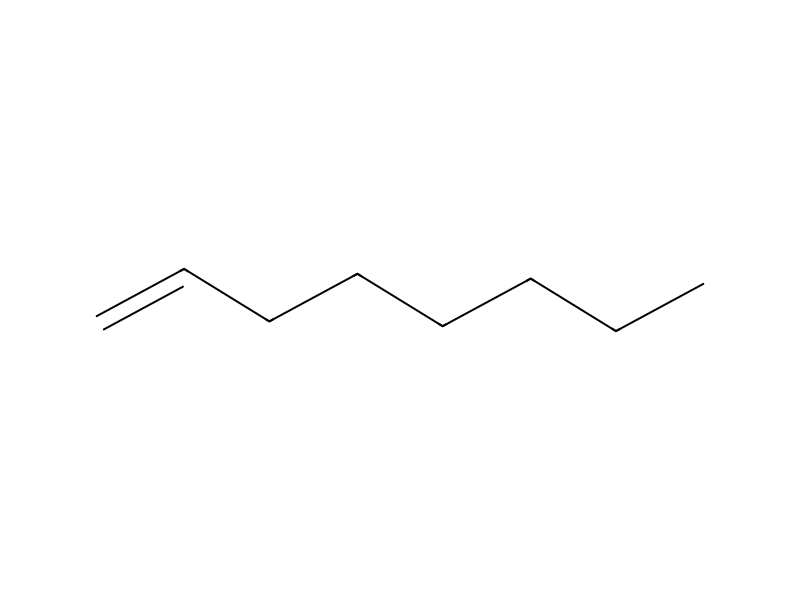
[CH2:1]=[CH:2][CH2:3][CH2:4][CH2:5][CH2:6][CH2:7][CH3:8]>C1CCCCC1.CCCCCCC.[CH-]1[C-]=[C-][C-]=[C-]1.[CH-]1[C-]=[C-][C-]=[C-]1.Cl[Ti]Cl>[CH3:1][CH2:2][CH2:3][CH2:4][CH2:5][CH2:6][CH2:7][CH3:8].[CH3:1][CH:2]=[CH:3][CH2:4][CH2:5][CH2:6][CH2:7][CH3:8]参加物




実験手順
0.12 mmoles of bis-(η5-cyclopentadienyl)titanium dichloride (Cp2TiCl2; Aldrich commercial product), 20 ml of anhydrous cyclohexane, 0.03 ml of a solution of n-dibutylglima 0.45 M in anhydrous cyclohexane and 0.54 ml of 1 molar Mg(butyl)2 in n-heptane (atomic ratio Mg/Ti=4.5), are charged into a tailed test-tube equipped with a magnetic stirrer, in an atmosphere of argon. The mixture is left under stirring for 20 hours at room temperature. 18.8 ml of 1-octene (distilled and maintained on molecular sieves) are added. At this point the solution is siphoned in an autoclave previously maintained under argon and the same procedure is carried out as described in example 1 above. At the end it is cooled to room temperature. About 14 ml of octane and 4 ml of 2-octene are obtained by distillation (GC, mass GC and NMR analyses). The results and process conditions are summarized in table 1 below.
後処理
- customequipped with a magnetic stirrer, in an atmosphere of argon
- waitThe mixture is left
- temperaturepreviously maintained under argon
- temperatureAt the end it is cooled to room temperature
出典と根拠
- ORDレコード
- ord-eeb13e21c0b84dd1bbb2834d05d724ac
- 出典データセット
- uspto-grants-2001_01
- 特許番号
- US06180553B2
関連ノート
読み込み中…