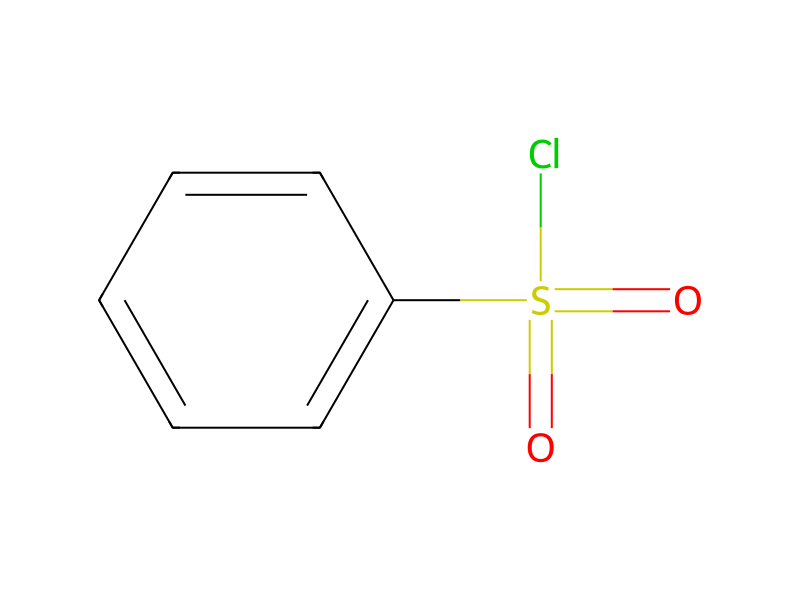
[CH3:1][O:2][C:3]([C:5]1[C:13]2[C:8](=[N:9][CH:10]=[C:11]([Cl:14])[CH:12]=2)[NH:7][C:6]=1[CH3:15])=[O:4].[OH-].[Na+].[C:18]1([S:24](Cl)(=[O:26])=[O:25])[CH:23]=[CH:22][CH:21]=[CH:20][CH:19]=1>[Cl-].C([N+](CC)(CC)CC)C1C=CC=CC=1.ClCCl>[CH3:1][O:2][C:3]([C:5]1[C:13]2[C:8](=[N:9][CH:10]=[C:11]([Cl:14])[CH:12]=2)[N:7]([S:24]([C:18]2[CH:23]=[CH:22][CH:21]=[CH:20][CH:19]=2)(=[O:26])=[O:25])[C:6]=1[CH3:15])=[O:4]A cooled (0-5° C.) suspension of 5-chloro-2-methyl-1H-pyrrolo[2,3-b]pyridine-3-carboxylic acid methyl ester (57 g, 0.25 mol), powdered sodium hydroxide (30.45 g, 0.76 mol) and benzyltriethylammonium chloride (1.16 g, 5.1 mmol) in dichloromethane (800 mL) was treated over ca. 5 minutes with benzenesulfonyl chloride (56.1 g, 40.5 mL, 0.32 mol). The reaction mixture was allowed to stir at 0-5° C. for 15 minutes then allowed to warm to ambient temperature and stirred for 24 hours. The solid was removed by filtration through celite and the cake washed with dichloromethane. The filtrate was evaporated and the resultant residue triturated with diethyl ether to afford the title compound as a brown solid (17.5 g, 30%). LCMS (Method B): RT=4.67 min, M+Na+=381. 1H NMR (400 MHz, CDCl3): 8.34 (d, J=2.4 Hz, 1H), 8.25 (d, J=2.4 Hz, 1H), 8.18-8.18 (m, 2H), 7.61-7.61 (m, 1H), 7.51-7.50 (m, 2H), 3.94 (s, 3H), 3.15 (s, 3H).