反応式
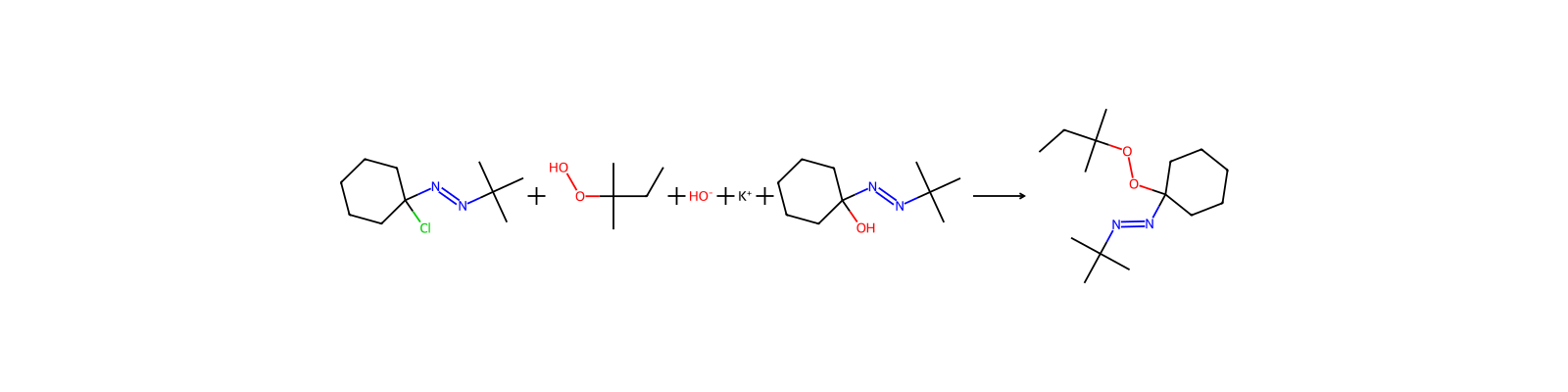
[C:1]([N:5]=[N:6][C:7]1(Cl)[CH2:12][CH2:11][CH2:10][CH2:9][CH2:8]1)([CH3:4])([CH3:3])[CH3:2].[C:14]([O:19][OH:20])([CH2:17][CH3:18])([CH3:16])[CH3:15].[OH-].[K+].C(N=NC1(O)CCCCC1)(C)(C)C>>[C:1]([N:5]=[N:6][C:7]1([O:20][O:19][C:14]([CH2:17][CH3:18])([CH3:16])[CH3:15])[CH2:12][CH2:11][CH2:10][CH2:9][CH2:8]1)([CH3:4])([CH3:3])[CH3:2]参加物
5



実験手順
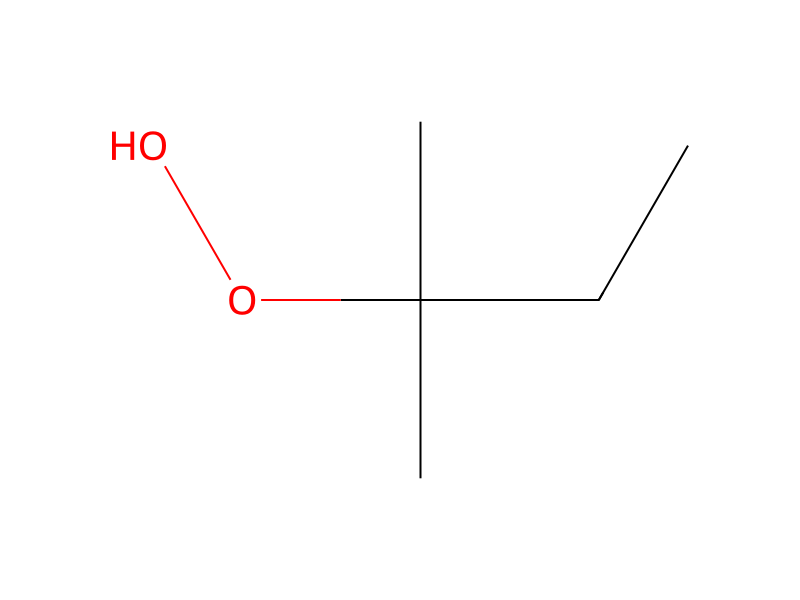
The 1-t-butylazo-1-(t-amylperoxy)cyclohexane was prepared in 85% crude yield from 7.5 grams (.037 moles) of 1-t-butylazo-1-chlorocyclohexane, 6.0 grams (.052 moles) of 90% t-amyl hydroperoxide and 9.1 grams (.0407 moles) of 25% potassium hydroxide solution. The procedure was the same as that described in Example XX. The infrared spectrum of the product indicated there was a small amount of 1-t-butylazo-1-hydroxycyclohexane present in the product.
出典と根拠
- ORDレコード
- ord-5ff53a4a30ca43f7a2b3fd462144ebf0
- 出典データセット
- uspto-grants-1978_02
- 特許番号
- US04075199
関連ノート
読み込み中…