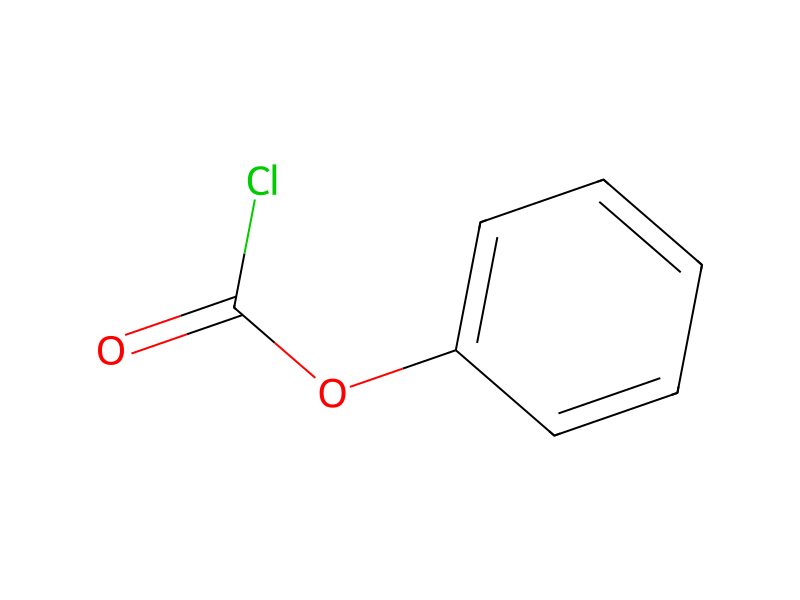
To a stirred mixture of 5-(1,1,1-trifluoro-2-methylpropan-2-yl)isoxazol-3-amine prepared as described in Example 259A (2.34 g, 12.06 mmol) and potassium carbonate (5 g, 36 mmol) in dry dichloromethane (50 mL) at 0° C., was added a solution of phenyl chloroformate (2.83 g, 18 mmol) in anhydrous dichloromethane (5 mL). The reaction mixture was warmed to room temperature and stirred for a further 15 h, then additional phenyl chloroformate (1 g, 6.3 mmol) was added and stirring was continued for a further 3 h. The reaction mixture was partitioned between water (200 mL) and dichloromethane (500 mL). The organic layer was separated, washed with brine (100 mL), dried over MgSO4, and then concentrated under reduced pressure to give a yellow oil. Purification via silica gel flash chromatography (eluting with 5% to 50% ethyl acetate in hexanes) afforded phenyl 5-(1,1,1-trifluoro-2-methylpropan-2-yl)isoxazol-3-ylcarbamate (2.63 g, 69%) as a colorless solid. 1H NMR (300 MHz, CDCl3) δ 8.16 (brs, 1H), 7.38-7.43 (m, 2H), 7.17-7.29 (m, 3H), 6.85 (s, 1H), 1.57 (s, 6H); LC-MS (ESI) m/z 315 (M+H)+.