反応式

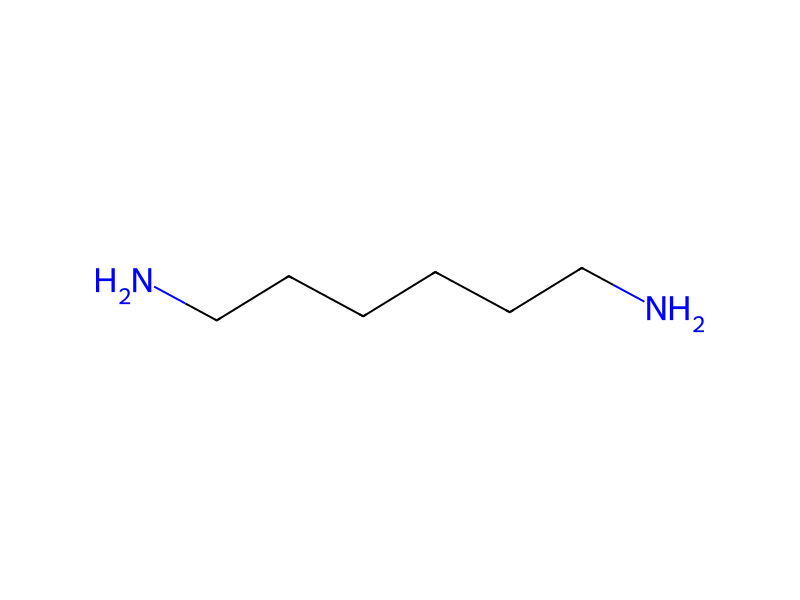
[NH2:1][CH2:2][CH2:3][CH2:4][CH2:5][CH2:6][CH2:7][NH2:8].[CH2:9]([S:17]([Cl:20])(=[O:19])=[O:18])[CH2:10][CH2:11][CH2:12][S:13]([Cl:16])(=[O:15])=[O:14]>>[CH2:9]([S:17]([Cl:20])(=[O:18])=[O:19])[CH2:10][CH2:11][CH2:12][S:13]([Cl:16])(=[O:15])=[O:14].[NH2:1][CH2:2][CH2:3][CH2:4][CH2:5][CH2:6][CH2:7][NH2:8]参加物
3


実験手順
Next, the 1,6-diaminohexane vapor in the condensing chamber 2 was adiabatically expanded, and the introduced base particles were exposed thereto for 3 minutes. Consequently, a polymerization reaction between 1,4-butanedisulfonyl chloride and 1,6-diaminohexane took place on the surface of the base particles, forming a film of 1,4-butanedisulfonylchloride-1,6-diaminohexane co-polymer.
出典と根拠
- ORDレコード
- ord-e38bf358eaab4352b72a0318515e2db2
- 出典データセット
- uspto-grants-2001_02
- 特許番号
- US06194487B1
関連ノート
読み込み中…