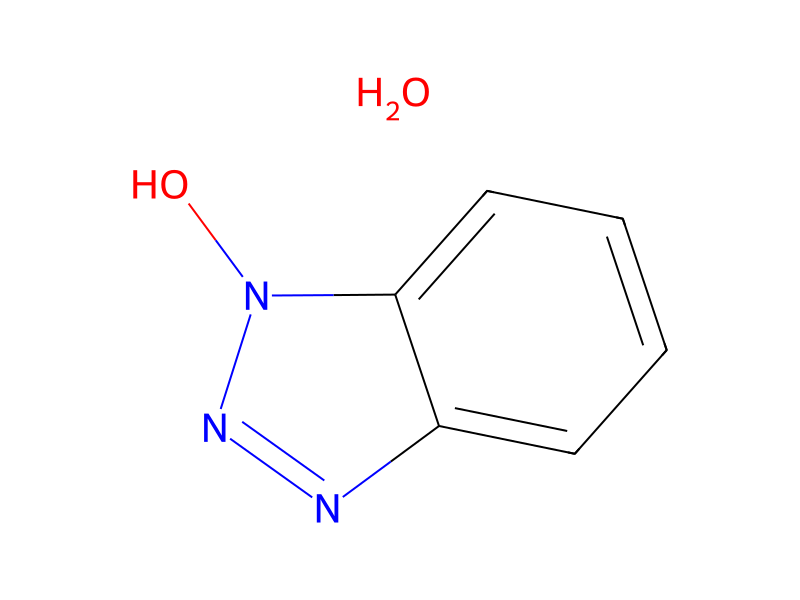
A vial was charged with (6-phenyl-pyridazin-3-yl)-hydrazine dihydrochloride (20 mg, 0.077 mmol), (2-methyl-quinolin-6-yl)-acetic acid (17 mg, 0.085 mmol), N-(3-dimethylaminopropyl)-N′-ethylcarbodiimide hydrochloride (22 mg, 0.115 mmol), 1-hydroxybenzotriazole hydrate (11 mg, 0.077 mmol), potassium carbonate (32 mg, 0.231 mmol), and N,N-dimethyl formamide (0.7 mL). The reaction mixture was stirred at room temperature for 14 h. After such time the mixture was concentrated in vacuo. Acetic acid (1 mL) was added to the residue and the resulting reaction mixture was stirred at 55° C. for 5 h. After such time the mixture was concentrated in vacuo and partitioned between 1 M aqueous potassium carbonate and ethyl acetate. The organic layer was washed with 1 M aqueous potassium carbonate, then brine, and directly adsorbed on silica gel. Purification on silica gel with 0-8% gradient of methanol in ethyl acetate afforded the title compound (8.7 mg, 0.024 mmol, 32% yield) as a light yellow solid. Analytical data presented in Table 1.