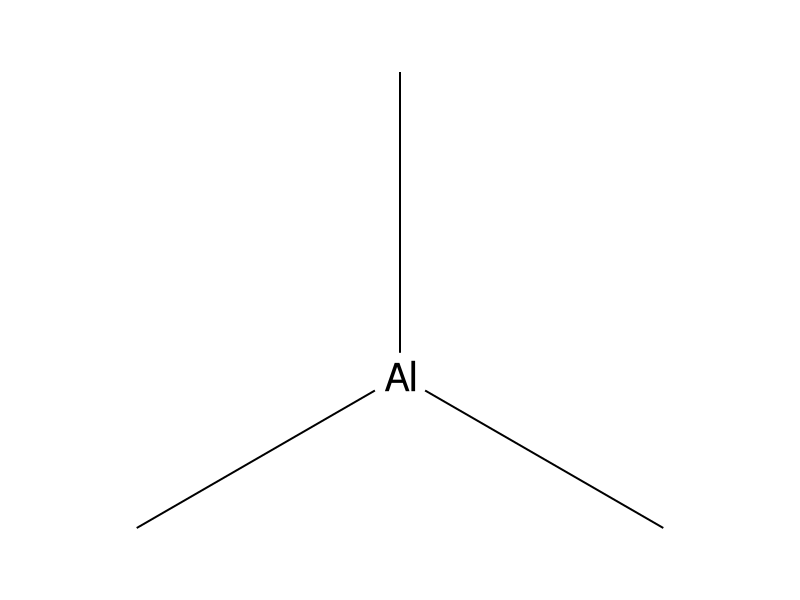
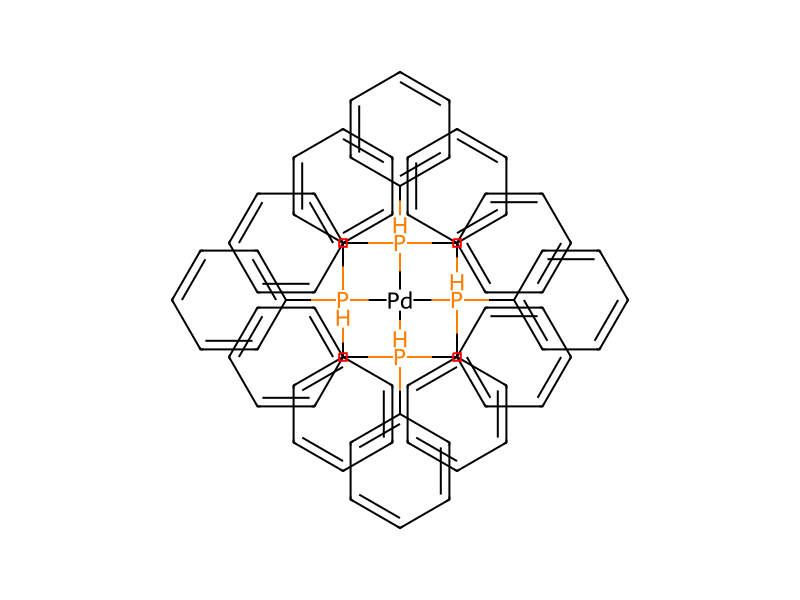
Br[C:2]1[C:7]([CH3:8])=[CH:6][N+:5]([O-:9])=[C:4]([CH3:10])[C:3]=1[CH3:11].[CH3:12][Al](C)C.[Cl-].[NH4+]>C1COCC1.C1(C)C=CC=CC=1.C1(P([Pd](P(C2C=CC=CC=2)(C2C=CC=CC=2)C2C=CC=CC=2)(P(C2C=CC=CC=2)(C2C=CC=CC=2)C2C=CC=CC=2)P(C2C=CC=CC=2)(C2C=CC=CC=2)C2C=CC=CC=2)(C2C=CC=CC=2)C2C=CC=CC=2)C=CC=CC=1>[CH3:10][C:4]1[C:3]([CH3:11])=[C:2]([CH3:12])[C:7]([CH3:8])=[CH:6][N+:5]=1[O-:9]4-Bromo-2,3,5-trimethyl-pyridine 1-oxide (2 g, 9.2 mmole) and catalytic tetrakis(triphenylphosphino)-palladium (80 mg, 4% by wt) in 20 mL of dry THF before treating with trimethylaluminum (2M in toluene, 15.2 mmole) under nitrogen. The solution was heated to reflux for 3 h, diluted with toluene (20 mL) before quenching the reaction with 4 mL of methanol followed by ammonium chloride (15 mmole). The mixture was refluxed for 2 h and filtered, while hot, on Celite. See J. Med. Chem. 1999, 42(12), 2064–2086. HPLC Rt: 4.183 min. 1H-NMR (CDCl3): δ 8.05 (s, 1H), 2.55 (s, 3H), 2.27 (s, 3H), 2.22 (s, 3H), 2.20 (s, 3H).