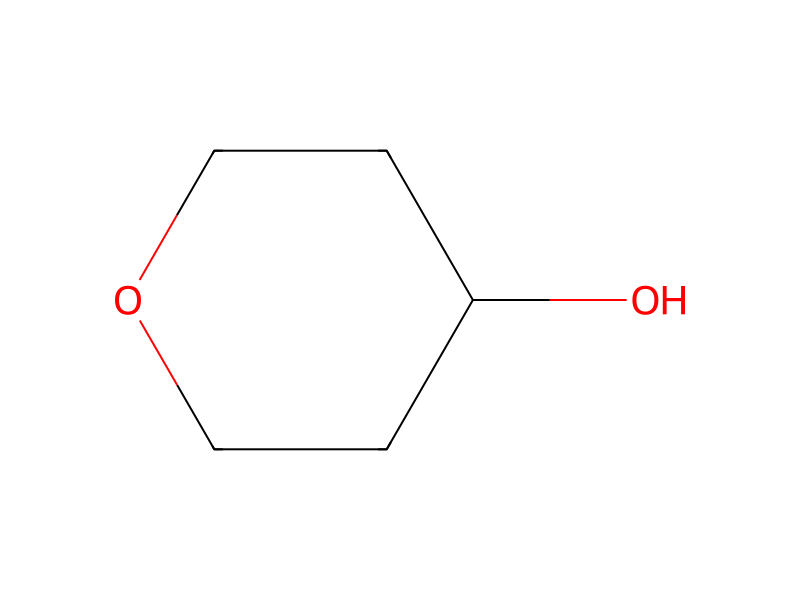
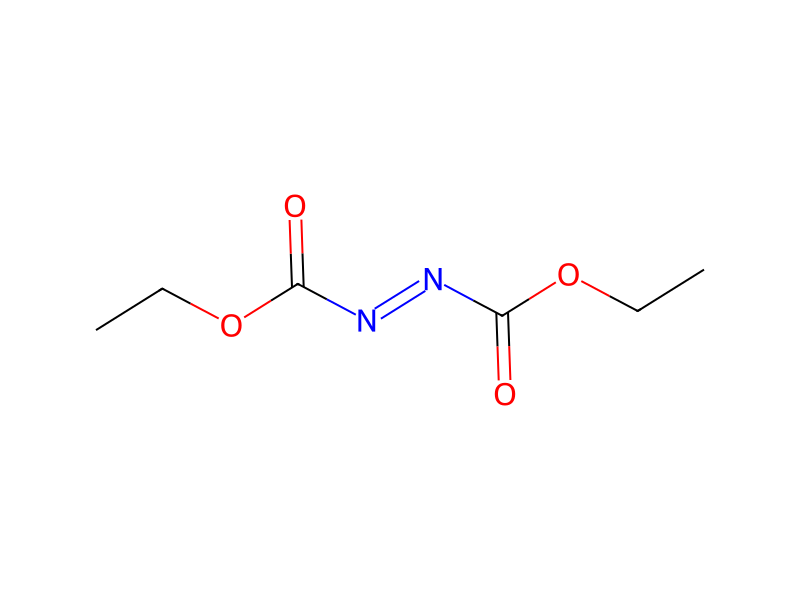
N(C(OCC)=O)=NC(OCC)=O.[OH:13][C:14]1[CH:30]=[CH:29][C:17]([C:18]([C:20]2[CH:25]=[CH:24][C:23]([N+:26]([O-:28])=[O:27])=[CH:22][CH:21]=2)=[O:19])=[CH:16][CH:15]=1.O[CH:32]1[CH2:37][CH2:36][O:35][CH2:34][CH2:33]1.C1(P(C2C=CC=CC=2)C2C=CC=CC=2)C=CC=CC=1>O1CCCC1>[O:35]1[CH2:36][CH2:37][CH:32]([O:13][C:14]2[CH:30]=[CH:29][C:17]([C:18]([C:20]3[CH:25]=[CH:24][C:23]([N+:26]([O-:28])=[O:27])=[CH:22][CH:21]=3)=[O:19])=[CH:16][CH:15]=2)[CH2:33][CH2:34]1Diethyl azodicarboxylate (1.47 g, 8.4 mmol) was slowly added dropwise to a solution of 4-(4-hydroxybenzoyl)-nitrobenzene (1.7 g, 7 mmol) (prepared as described in Example 1, steps), 4-hydroxytetrahydropyran (0.78 g, 7.7 mmol) and triphenylphosphine (2.2 g, 8.4 mmol) in dry tetrahydrofuran (20 mL) while stirring at room temperature under inert atmosphere. The reaction mixture was stirred for an additional hour then quenched with water (1 mL) and concentrated in vacuo. The residue was diluted with water and extracted with ethyl acetate. The combined organic extracts were washed with water and brine, dried (Na2SO4), and concentrated in vacuo. The crude product was chromatographed on silica gel (25% ethyl acetate/hexanes) and crystallized from hexanes to give 4-(4-tetrahydropyran-4-yloxybenzoyl)-nitrobenzene (1.4 g, 61%) as a white solid, m.p. 105–106° C.; Analysis for C18H17NO5: Calc.: C, 66.05; H, 5.23; N, 4.28; Found: C, 65.95; H, 5.14; N, 4.38. MS m/e (%): 283 (M+; 100).