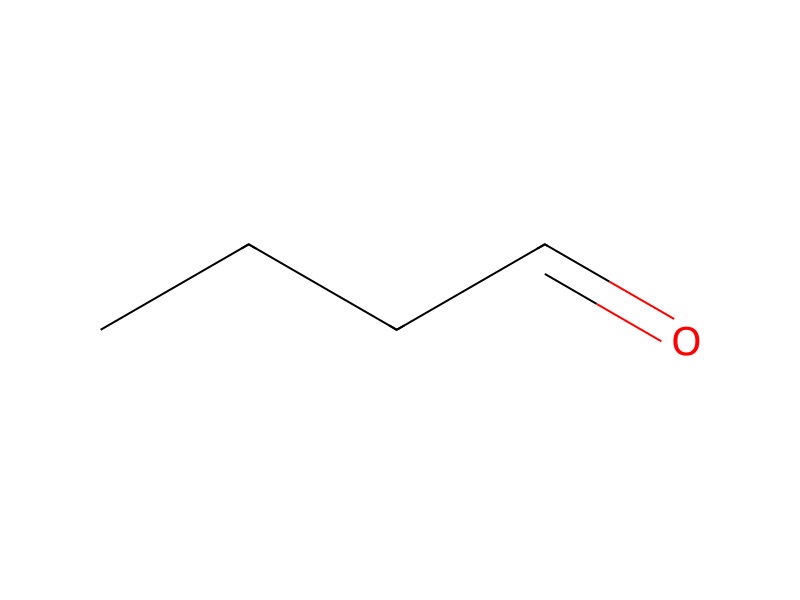
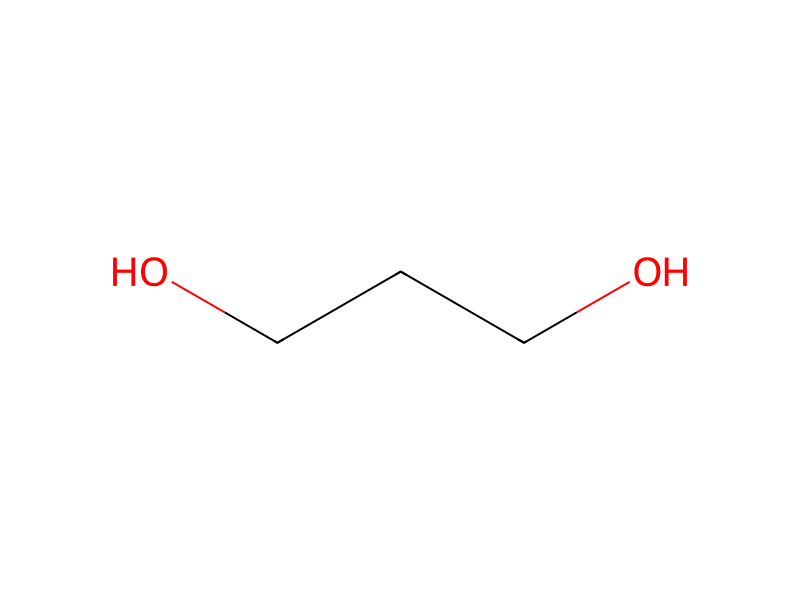
Butanal → 2-Propyl-1,3-dioxane
反応式

[CH:1](=[O:5])[CH2:2][CH2:3][CH3:4].[CH2:6](O)[CH2:7][CH2:8][OH:9]>P(=O)(O)(O)O.O>[CH2:2]([CH:1]1[O:9][CH2:8][CH2:7][CH2:6][O:5]1)[CH2:3][CH3:4]参加物
5



実験手順
This example illustrates the limitations of conventional synthesis methods. A 500 mL round bottom is charged with 191 g normal butyraldehyde, 101 g of 1,3-propanediol, and 4 drops 85% phosphoric acid. The round bottom is fitted with a Dean-Stark trap and condenser and the entire apparatus is placed into an electric heating mantle and brought to reflux. The aldehyde/water azeotrope condenses and separates into the trap. Heating is maintained until 24 mL of water has evolved (1 hr). The mixture is cooled and poured into a separatory funnel. The solution is washed twice with 50 mL of saturated sodium bicarbonate solution and once with 50 mL of distilled water. The organics are dried over MgSO4 and the residue distilled. A fraction collected at 150° C. is 99.6% acetal and has a mass of 95.7 g. This corresponds to a yield of 56%, lower than the yields reported in Table II.