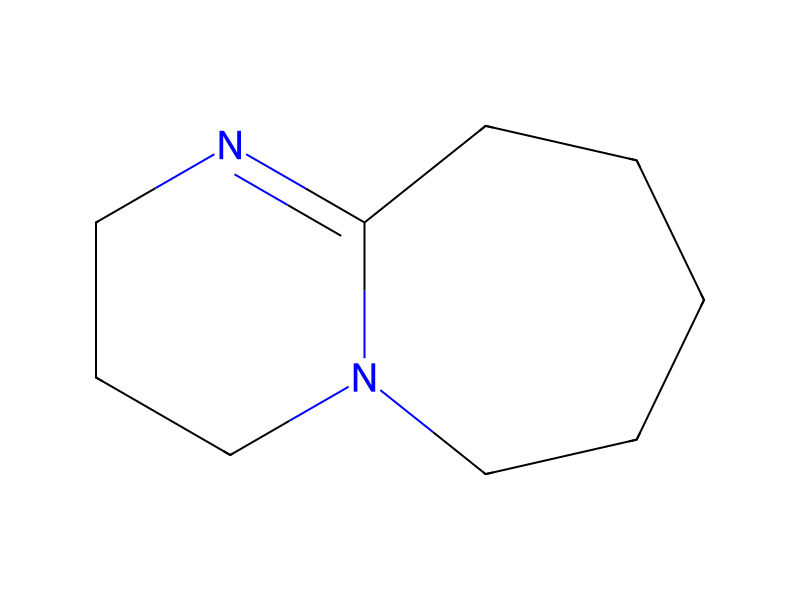
[F:1][C:2]1[CH:34]=[CH:33][C:5]2[S:6][C:7]([S:10]([NH:13][C:14]3[CH:19]=[CH:18][C:17]([C:20]4[O:21][CH2:22][CH:23]([C:25]([O:27][CH3:28])=[O:26])[N:24]=4)=[CH:16][C:15]=3[S:29]([CH3:32])(=[O:31])=[O:30])(=[O:12])=[O:11])=[C:8]([CH3:9])[C:4]=2[CH:3]=1.BrC(Cl)(Cl)Cl.C1CCN2C(=NCCC2)CC1>ClCCl>[F:1][C:2]1[CH:34]=[CH:33][C:5]2[S:6][C:7]([S:10]([NH:13][C:14]3[CH:19]=[CH:18][C:17]([C:20]4[O:21][CH:22]=[C:23]([C:25]([O:27][CH3:28])=[O:26])[N:24]=4)=[CH:16][C:15]=3[S:29]([CH3:32])(=[O:31])=[O:30])(=[O:11])=[O:12])=[C:8]([CH3:9])[C:4]=2[CH:3]=1Into 40 mL of dichloromethane was dissolved 1.10 g of Compound 22, followed by addition of 498 mg of bromotrichloromethane at −20° C. Further, 700 mg of DBU was added dropwise at the same temperature and the whole was stirred at the same temperature for 5 minutes and then warmed to 0° C., followed by 3.5 hours of stirring. After confirmation of disappearance of the starting material, the reaction was terminated by adding saturated aqueous sodium hydrogen carbonate solution at 0° C., followed by extraction with ethyl acetate. The organic layer was washed with saturated brine and then dried over anhydrous magnesium sulfate. The solvent was removed by evaporation and the residue was purified by silica gel column chromatography (ethyl acetate/methanol=20/1) to obtain 597 mg of the title compound as colorless powder.