反応式

[Si](OO[CH2:10][C@H:11]1O[C@@H:14]([N:16]2[CH:23]=[C:22](CBr)[C:20](=O)[NH:19][C:17]2=O)[CH2:13][CH2:12]1)(C(C)(C)C)(C)C.[Cu].[Cu:27]([I:29])[I:28].[F:30][C:31]([F:42])([F:41])[C:32]([NH:34][CH2:35][CH2:36][O:37][CH2:38][C:39]#[CH:40])=[O:33].CCCCCCC=CCCC.[Si](OOC[C@H]1O[C@@H](N2C=C(CC#CCOCCNC(=O)C(F)(F)F)C(=O)NC2=O)CC1)(C(C)(C)C)(C)C.[C-]#[C-]>>[Cu:27]([I:29])[I:28].[F:30][C:31]([F:41])([F:42])[C:32]([NH:34][CH2:35][CH2:36][O:37][CH2:38][C:39]#[CH:40])=[O:33].[CH2:12]1[CH2:13][CH2:14][N:16]2[C:17](=[N:19][CH2:20][CH2:22][CH2:23]2)[CH2:10][CH2:11]1参加物
反応物 7
 HCID 23978Copper
 HCID 83717Copper iodide
 HCID 136496Undec-4-ene
 HCID 167426213-(2-Trifluoroacetamidoethoxy)propyne
 HCID 873646485'-O-tert-butyldimethylsilyloxy-5-bromomethyl-2',3'-dideoxyuridine
 HCID 873650905'-O-tert-butyldimethylsilyloxy-(5-(4-(N-trifluoroacetyl-2-aminoethoxy)but-2-yn-1-yl))-2',3'-dideoxyuridine
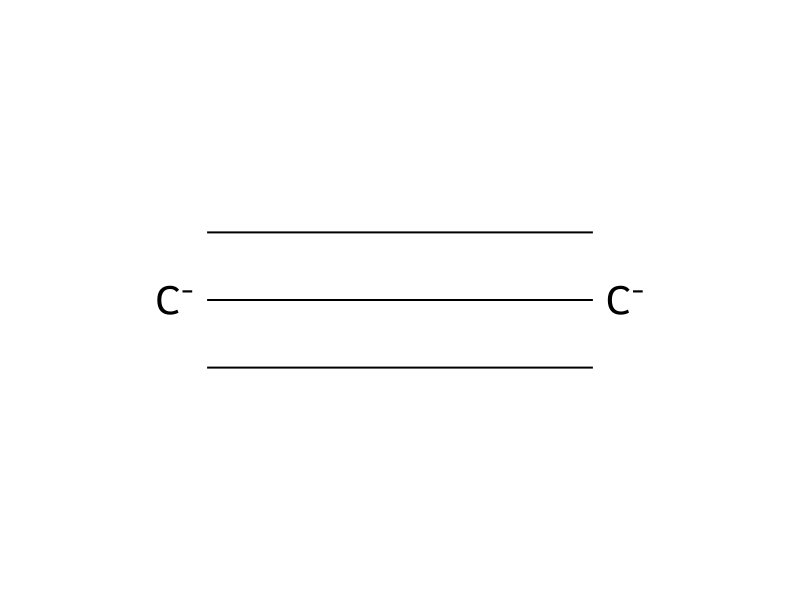 HCID 178420940HCID 178420940、化合物
生成物 3

実験手順
Next, 5′-O-tert-butyldimethylsilyloxy-5-bromomethyl-2′,3′-dideoxyuridine (3) can be coupled with an alkyne, in this case 3-(N-trifluoroacetyl-2-aminoethoxy)prop-1-yne, to form the 5′-O-tert-butyldimethylsilyloxy-(5-(4-(N-trifluoroacetyl-2-aminoethoxy)but-2-yn-1-yl))-2′,3′-dideoxyuridine (4). It will be readily appreciated by one of skill in the art that the coupling of an alkyl halide with an alkyne can be carried out by a number of methods known in the art. Without being limiting in any way, one example of such a method known in the art is the so-called Castro-Stephens coupling, see for example, White, J. D., et. al. J. Am. Chem. Soc., 123(23), 5407-5413 (2001) and Stephens, R. D., et. al. J. Org. Chem., 28, 3313 (1963). For example, as shown in Scheme 1,5′-O-tert-butyldimethylsilyloxy-5-bromomethyl-2′,3′ dideoxyuridine (3) can be contacted with a mixture comprising a copper reagent, for example copper iodide (CuI), an alkyne, for example 3-(N-trifluoroacetyl-2-aminoethoxy)prop-1-yne, and a base, for example 1,8-diazobicyloclo[5.4.0]undec-7-ene (DBU), to form 5′-O-tert-butyldimethylsilyloxy-(5-(4-(N-trifluoroacetyl-2-aminoethoxy)but-2-yn-1-yl))-2′,3′-dideoxyuridine (4), where an acetylide anion is formed in the mixture comprising CuI, 3-(N-trifluoroacetyl-2-aminoethoxy)prop-1-yne, and DBU.
出典と根拠
- ORDレコード
- ord-3ebf7363f90f421092e6020c3c9b93ba
- 出典データセット
- uspto-grants-2014_09
- 特許番号
- US08835625B2
関連ノート
読み込み中…