Benzaldehyde → Benzoic Acid
反応式
C(F)(F)F.C([O:9][K])(C)(C)C.CN(C=O)C.[CH:16](=[O:23])[C:17]1[CH:22]=[CH:21][CH:20]=[CH:19][CH:18]=1>>[CH2:16]([OH:23])[C:17]1[CH:22]=[CH:21][CH:20]=[CH:19][CH:18]=1.[C:16]([OH:9])(=[O:23])[C:17]1[CH:22]=[CH:21][CH:20]=[CH:19][CH:18]=1参加物
4



実験手順
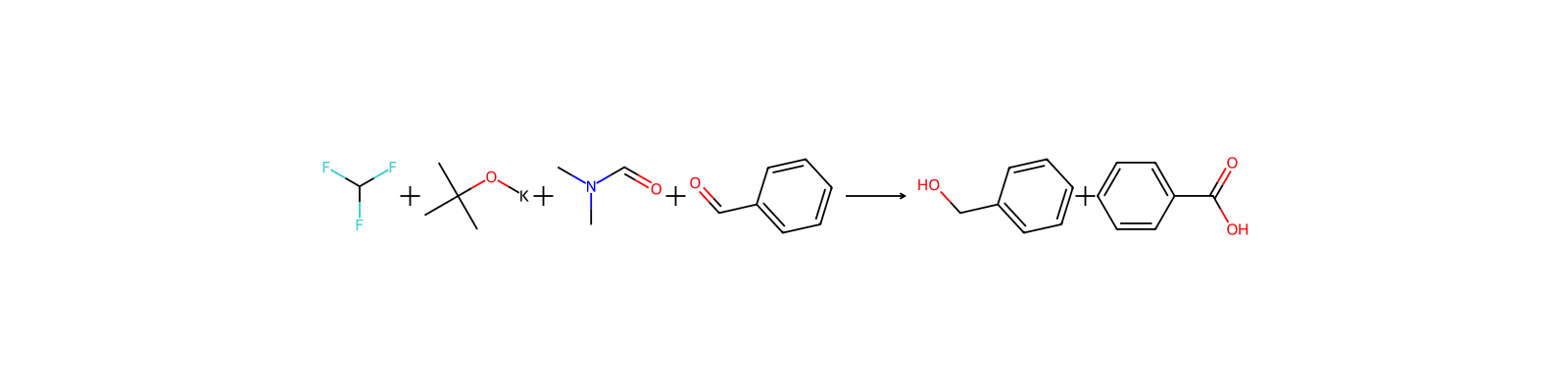
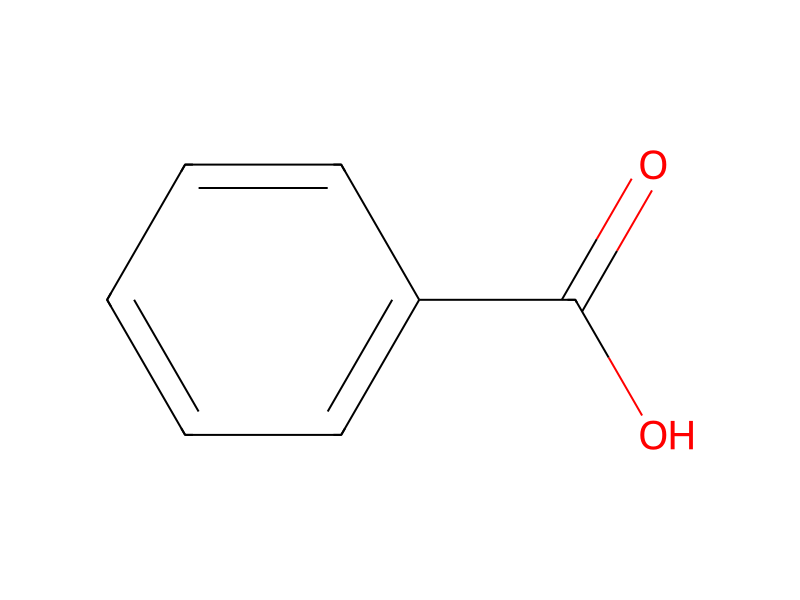
Shono and co-workers found that when they used CF3H/tBuOK/DMF to react with benzaldehyde at −50° C., benzyl alcohol and benzoic acid were formed by the competing Cannizzaro reaction (Shono, T.; Ishifume, M.; Okada, T.; Kashimura, S. J. Org. Chem. 1991, 56, 2). As mentioned above, the product of the present method is substantially free of benzyl alcohol and benzoic acid. Although Russell and Roques repeated the Shono reaction using excess CF3H (9.5 eq.) and tBuOK (2.2 eq.) at −50° C., and 67% yield of trifluoromethylated product 5 was formed and no benzyl alcohol was detected (Russell, J.; Roques, N. Tetrahedron 1998, 54, 13771), they reported that the high reaction temperature with excess base could lead to Cannizzaro reaction and jeopardize the nucleophilic trifluoromethylation.