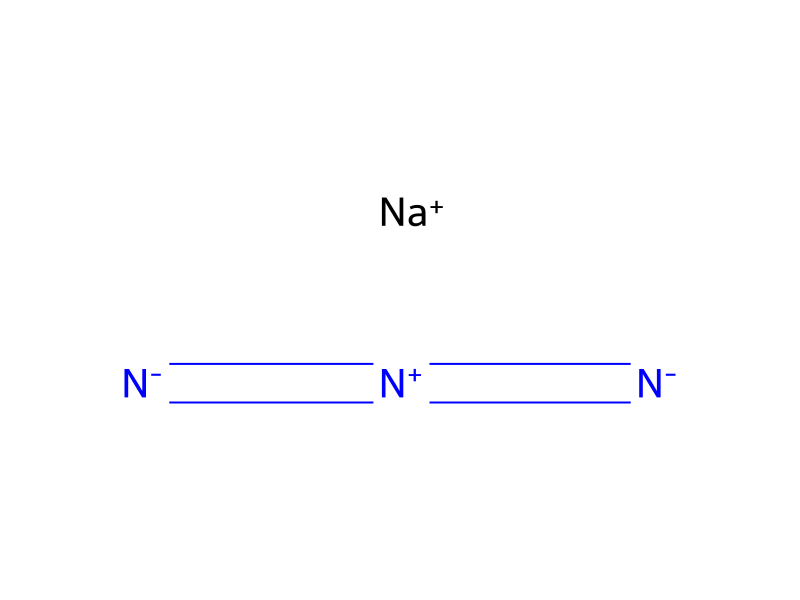
To the solution of ethyl 6-chloro-5-fluoro-2-(trifluoromethyl)-2H-chromene-3-carboxylate (1.0 g, 3.1 mmol) in 20 mL of DMSO was added a solution of sodium azide (1.0 g, 5 mmol) in minimum amount of water. The reaction was then heated to 85° C. for 15 hrs. After cooling to room temperature, to the reaction was added 200 mL of ethyl acetate. The resulting suspension was then washed with brine, and dried over anhydrous magnesium sulfate. After removing the solvents, the residue was purified on silica gel column with ethyl acetate/hexane, it gave 0.8 g of a yellow oil. Part of the product was purified on reverse phase HPLC for further analytical characterization. It gave a pink solid. LC-MS(ES+) 348.3(M+1, 70), 320.2(M−27, 100). 1H NMR(CDCl3/400 MHz) 7.99(s, 1H), 7.24(d, J=8.8 Hz, 1H), 6.75(d, J=8.8 Hz, 1H), 5.67(q, J=6.8 Hz, 1H), 4.32(m, 2H), 1.35(t, J=7.2 Hz, 3H). 19F NMR(CDCl3/400 Hz) −78.71(d, J=6.8 Hz). 13C NMR(CDCl3/400 Hz) 163.7, 152.7, 134.4, 133.9, 131.9,123.3(q, J=287.3 Hz), 122.6, 117.7, 114.6, 114.2, 70.6(q, J=33.3 Hz), 61.9, 14.4. HRSM(EI+) m/e calc. for (C13H9ClF3N3O3) 347.0285(M+), found: 347.0294(M+).