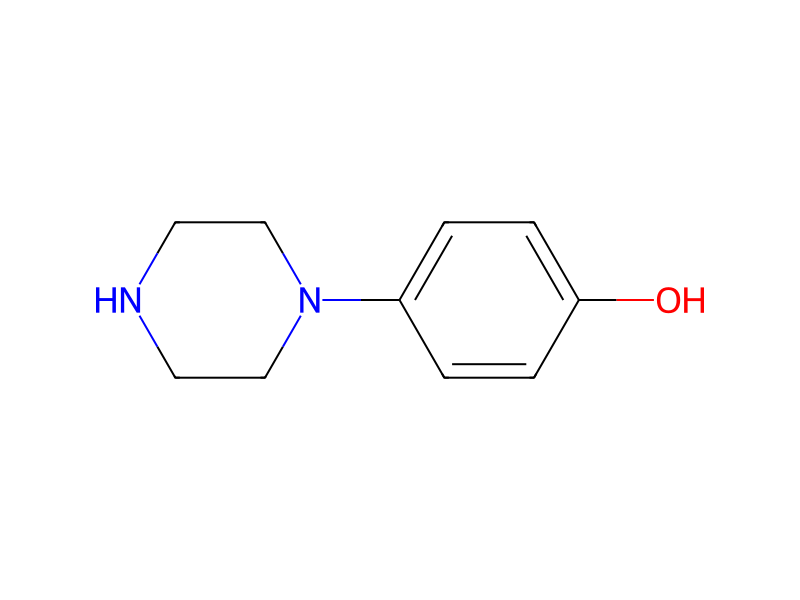
4-(4-hydroxyphenyl)piperazine (3 g, 16.8 mmol) and 4-trifluoromethoxy benzaldehyde (3.36 g, 17.7 mmol) were dissolved in methanol (60 ml) and methylene chloride (15 ml). Sodium cyanoborohydride (1.59 g, 25.3 mmol) and-acetic acid (1.6 ml) were added to this solution while cooling in an ice-bath, and the mixture was stirred for 2 hours. Saturated sodium hydrogencarbonate aqueous solution and methylene chloride were added to the reaction mixture, which was extracted with methylene chloride. The extract was washed with brine, dried over magnesium sulfate, and then filtered. The filtrate was concentrated under reduced pressure. The residue was purified by silica gel column chromatography (methylene chloride/methanol=100/1) to afford 4-[4-(4-trifluoromethoxybenzyl)piperazin-1-yl]phenol (3.36 g, yield 57%) as a colorless crystalline powder.